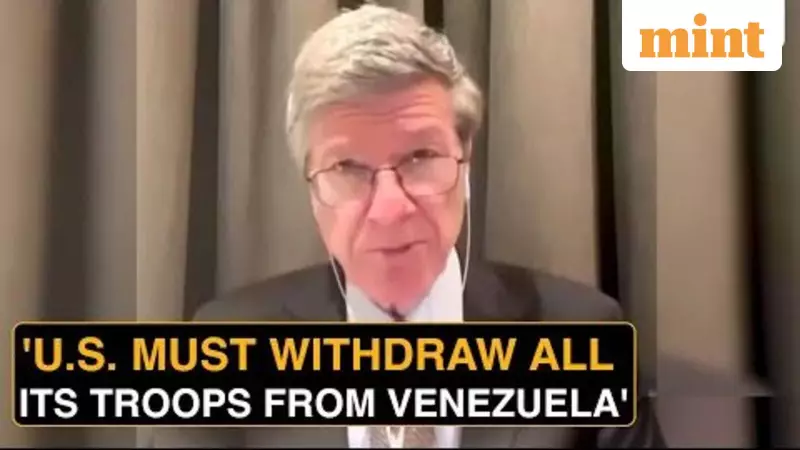
In a dramatic address at the United Nations, a prominent American economist launched a scathing critique of his own country's foreign policy. Jeffrey Sachs, a renowned economist and UN adviser, used an emergency session of the UN Security Council to vehemently condemn recent United States actions against Venezuela.
A Fiery Condemnation at the World Stage
During the high-stakes meeting, Sachs did not mince words. He ridiculed President Donald Trump's approach to the ongoing political and humanitarian crisis in the South American nation. The economist accused the US administration of engaging in a blatant "hegemonic power grab" through its aggressive tactics. These tactics, according to his statement, included the recent strikes on Venezuelan territory and the controversial capture warrants issued for President Nicolás Maduro and his wife.
Upholding the UN Charter Against Aggression
Sachs made a passionate appeal to the Council's members. He urged them to stand firm in their commitment to the foundational principles of the international body. His core argument centered on the need to uphold the UN Charter and respect international law, warning that failure to do so would undermine the entire global order. The economist framed the US-led actions as a dangerous precedent of aggression that threatened the stability of worldwide diplomatic norms.

The session, convened to address the escalating situation in Venezuela, turned into a platform for this unexpected internal criticism from a US citizen. Sachs's warning was clear and dire: unchecked unilateral power moves by a superpower like the United States pose a significant threat to the rules-based system that has governed international relations for decades.
Reactions and the Path Forward
While the immediate reactions from other Council members and the US delegation to Sachs's specific remarks were not detailed in the initial report, such a public denunciation is highly significant. It highlights the deep divisions and intense debate surrounding the appropriate international response to Venezuela's protracted crisis. The event underscores how the issue has become a flashpoint for broader discussions about sovereignty, intervention, and the limits of power in the 21st century.
The call from the UN adviser is likely to resonate with nations that are traditionally skeptical of Western interventionism. It adds a powerful intellectual voice to the argument that solutions must be found through multilateral dialogue and legal frameworks, rather than through coercive measures that could be perceived as imperial overreach.