Iran's UN Envoy Urges UNSC to Uphold Responsibility for Global Peace
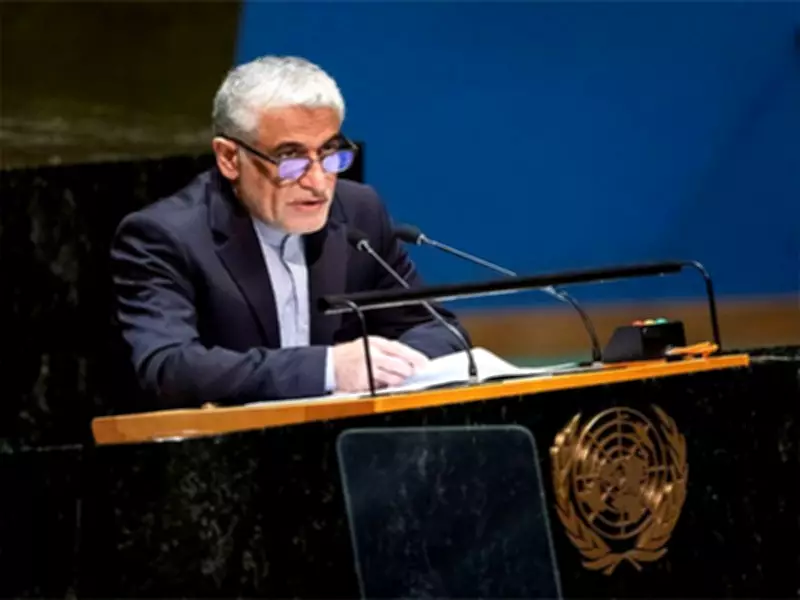
The Iranian Ambassador and Permanent Representative to the United Nations, Amir Saeid Iravani, has formally addressed the global body, asserting that Israel must be held accountable for what he described as "ongoing aggression against Iran." In a direct communication sent on Tuesday to UN Secretary-General Antonio Guterres and the President of the UN Security Council, Iravani emphasised that the "UNSC must accept its fundamental responsibility towards protecting international peace."
Allegations of Sovereignty Violations and Civilian Toll
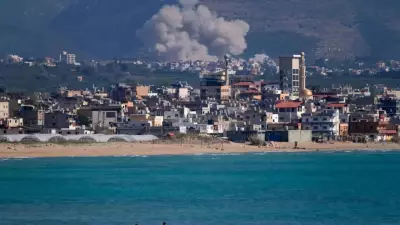
According to state broadcaster Press TV, the envoy's letter accused the Israeli regime of "violation of the country's sovereignty and territorial integrity," resulting in significant civilian casualties and destruction of vital infrastructure. The document provided a grim assessment, claiming that since 28 February, the Israeli regime and the US have killed "at least 1,348 civilians," including "233 women and 202 children." It further alleged that "19,734 civilian infrastructure" sites have been compromised, with specific losses cited such as the destruction of "16,191 living units, 1,617 commercial buildings, 77 medical centres and pharmacies, and 65 schools."
Call for Investigation and Legal Accountability
Iravani called for a formal investigation into "egregious violations of the UN charter and international law by the US and the Israeli regime." He warned that the "UN Charter must not be weakened by the Israeli regime's normalisation of use of force," and urged the Council to hold the "aggressors accountable in accordance with Chapter 7 of the UN Charter." The correspondence categorised the military actions as a "brazen violation of international law," insisting that the UN has a "statutory obligation to condemn the aggression categorically and unequivocally."

Regional Impact and Iran's Defensive Stance
Highlighting the broader regional impact, Iravani noted that such actions represent a dangerous trend of "aggression towards regional countries." He stressed the "international responsibility of governments to prevent their territory to be used for aggression," calling for "the observance of good neighbourliness" and demanding that neighbouring nations prevent the "continued use of their territories against the Islamic Republic of Iran."
Detailing Iran's legal stance, the letter reaffirmed the nation's commitment to the UN Charter and international law, but explicitly stated that Iran "continues to exercise its inherent right to protect its sovereignty, national integrity, and civilians against any aggression." Invoking "Article 51 of the United Nations Charter," Iranian officials maintained that the country possesses the "legal right to defend itself," arguing that these measures are necessary responses to "acts of aggression" carried out by the United States and the Israeli regime.
Background of Hostilities and Counter-Strikes
The current hostilities trace back to late February, when US and Israeli forces launched strikes against 30 targets across Tehran. These actions led to the death of the former Leader of the Islamic Revolution, Ayatollah Seyyed Ali Khamenei, and several other high-ranking Iranian officials. In the aftermath, Iranian forces have responded with "barrages of missiles and drones" directed at Israeli-occupied territories and US regional installations. State broadcaster Press TV noted that Tehran views these counter-strikes as "legitimate self-defence."
This diplomatic message underscores escalating tensions in West Asia, with Iran positioning itself as a defender of sovereignty while calling for international intervention to address alleged violations. The UN Security Council now faces increased pressure to mediate and enforce accountability in this complex conflict.