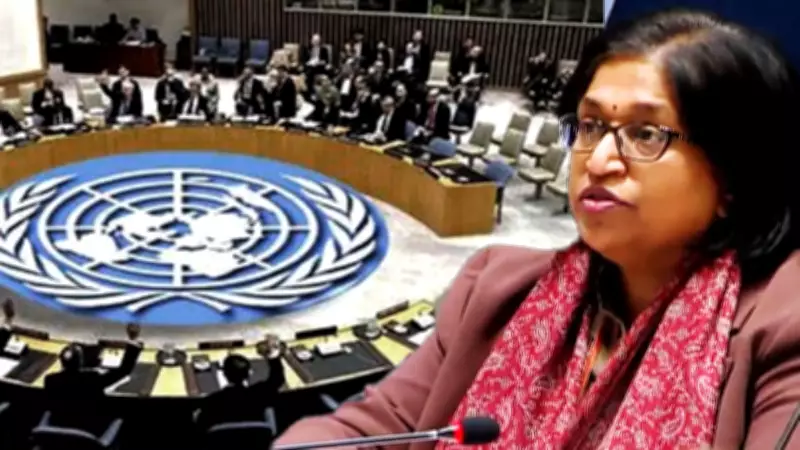
India Exposes UN Security Council's 'Glaring' Failures, Urges Immediate Expansion of Permanent Seats
India has dramatically escalated its campaign for comprehensive reform of the United Nations Security Council, declaring that global patience with the outdated structure has completely evaporated. During the latest round of high-stakes negotiations, Ambassador Yojna Patel delivered a powerful statement, asserting that the Council has consistently failed to fulfill its fundamental responsibilities regarding international peace and security.
Core Demands for Structural Reform
Ambassador Patel emphasized with unwavering clarity that any meaningful reform process must include the expansion of permanent membership within the Security Council. She issued a stern warning that without this critical component, the entire reform effort would remain fundamentally incomplete and ineffective. This position underscores India's long-standing aspiration for a permanent seat, reflecting its status as the world's largest democracy and a major global economy.
The Indian diplomat firmly rejected proposals that would create a third category of membership, arguing that such intermediate solutions risk delaying genuine, substantive reform for decades. She characterized these alternative proposals as diversionary tactics that would only perpetuate the current dysfunctional status quo.

Correcting Historical Imbalances
Patel insisted that the restructuring of the Security Council must actively correct, rather than exacerbate, the existing geographic and developmental imbalances. The current composition, largely reflecting the post-World War II power dynamics, fails to represent the contemporary geopolitical landscape where emerging economies play increasingly pivotal roles.
"Symbolic adjustments and minor procedural tweaks will simply not suffice," Patel declared, making India's position unmistakably clear. The intervention signals mounting frustration among emerging powers who feel systematically marginalized within the current UN architecture.
Growing Momentum for Change
India's forceful diplomatic push represents a broader movement among developing nations seeking a more equitable global governance system. The call is for decisive, structural expansion that genuinely mirrors twenty-first-century geopolitical realities, where power is more distributed and multilateral institutions must be more representative to maintain legitimacy.
This latest development occurs against a backdrop of increasing international recognition that the UN Security Council's effectiveness has been compromised by its anachronistic composition. As global challenges become more complex and interconnected, the pressure for institutional reform that includes voices from Africa, Latin America, and Asia continues to intensify.