

China has once again found itself at the centre of a major controversy at the United Nations, where its representatives made repeated attempts to silence discussions on the alleged use of forced labour among the Uyghur minority in the Xinjiang region. The incident occurred during a high-level UN forum, drawing sharp criticism from human rights advocates and the global community.
Disruptions and Diplomatic Confrontation at UN Forum
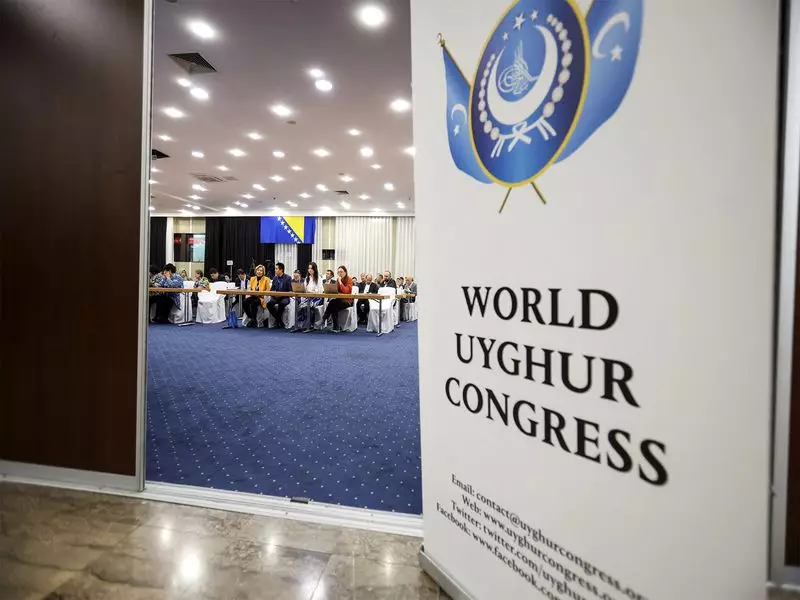
The focal point of the confrontation was a side event organised during the 55th session of the United Nations Human Rights Council in Geneva. The event, titled 'Uyghur Forced Labour: The Nexus of Business and Human Rights in the Uyghur Region', was convened by the World Uyghur Congress (WUC) and the Uyghur Human Rights Project. According to detailed reports, Chinese diplomats and their supporters engaged in a coordinated effort to disrupt the proceedings.
Eyewitnesses and organisers stated that pro-China attendees repeatedly interrupted speakers, shouted objections, and attempted to physically block the view of the presentation screen. This behaviour forced the session's chair to issue multiple warnings in an effort to maintain order. The Chinese mission to the UN in Geneva later defended these actions, characterising the event as a platform for "disinformation and political manipulation" and asserting its right to oppose what it termed interference in China's internal affairs.

Detailed Allegations of Systemic Forced Labour
Despite the disruptions, representatives from the World Uyghur Congress managed to present a comprehensive account of the alleged labour abuses. The central claim is that hundreds of thousands, if not millions, of Uyghurs and other Turkic minorities have been subjected to state-sponsored forced labour schemes. These schemes are reportedly framed under government initiatives like "poverty alleviation" and "vocational training."
The WUC testimony outlined a disturbing system where individuals are transferred from internment camps or their home communities to work in factories far from Xinjiang. These factories are said to be involved in producing goods for both the domestic Chinese market and global supply chains. Key sectors implicated include:
- Cotton and textile production
- Tomato and agricultural processing
- Electronics manufacturing
- Automotive components
The presentation emphasised that this labour transfer program is not voluntary. Workers are described as being under constant surveillance, subjected to political indoctrination, isolated from their families, and paid little to no wages. The WUC argued this constitutes a modern form of slavery that benefits both the Chinese state and private corporations.
Global Repercussions and the Call for Action
The incident at the UN is not an isolated event but part of a growing international response. Several countries, including the United States, Canada, and the United Kingdom, have already passed or are considering legislation to ban imports linked to forced labour from Xinjiang. The Uyghur Forced Labor Prevention Act (UFLPA) in the US is a prime example, creating significant compliance challenges for multinational companies.
Human rights organisations and the WUC are using forums like the UN to increase diplomatic pressure on Beijing. They are calling for:
- Unfettered access for independent international observers to Xinjiang.
- The immediate dismantling of all forced labour programs.
- Accountability for those responsible for designing and implementing these policies.
- Vigilance from global businesses to ensure their supply chains are free of such abuse.
The repeated attempts by China to silence these discussions at the UN, however, highlight the significant challenges faced in achieving transparency and accountability. The situation presents a critical test for the international human rights system and its ability to address allegations against a major global power. For now, the voices from Xinjiang, amplified through diaspora groups like the WUC, continue to seek a platform on the world's stage, despite facing determined opposition.






