

US Government Urges American Citizens to Evacuate Over a Dozen Middle Eastern Nations
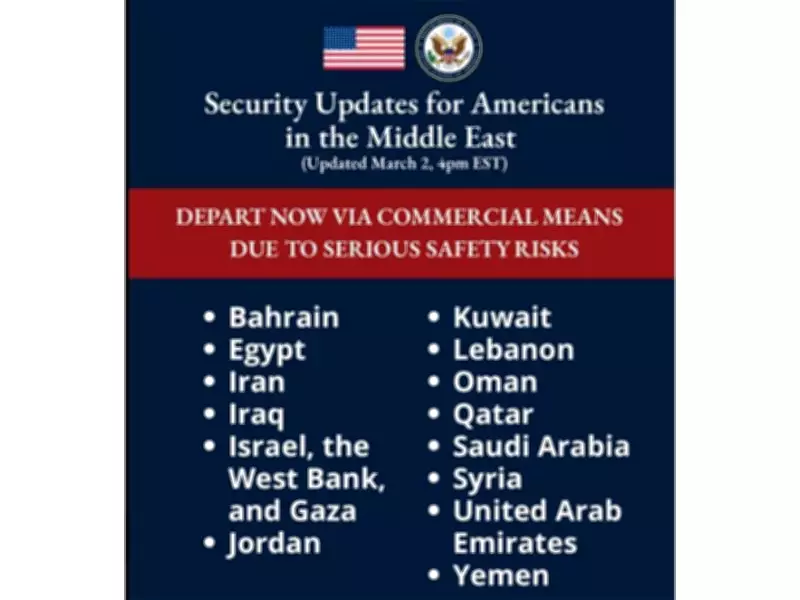
In a significant security development, the United States government has issued a formal travel advisory, strongly urging American citizens to leave more than 12 countries across the Middle East. This directive comes amid heightened tensions and the looming threat of conflict with Iran, which has raised serious concerns about regional stability and the safety of US nationals abroad.
Escalating Tensions Prompt Immediate Action
The advisory, released by the US Department of State, cites escalating geopolitical tensions and the potential for violent confrontations as primary reasons for the evacuation call. Officials have expressed specific worries about retaliatory actions from Iran or its allied groups, which could target American interests and individuals in the region. This move underscores the gravity of the situation, as such widespread advisories are typically reserved for high-risk scenarios.
The affected countries include key nations such as:

- Iraq
- Syria
- Lebanon
- Yemen
- Jordan
- Kuwait
- Qatar
- United Arab Emirates
- Oman
- Bahrain
- Saudi Arabia
- Israel
This list encompasses both conflict zones and relatively stable areas, indicating that the threat is perceived as broad and not confined to specific hotspots.
Background and Regional Implications
The tensions between the US and Iran have been simmering for years, driven by issues such as nuclear proliferation, regional influence, and proxy conflicts. Recent incidents, including military skirmishes and diplomatic standoffs, have exacerbated these frictions, leading to this unprecedented advisory. The US government has emphasized that the safety of its citizens is paramount, and the advisory is a precautionary measure to prevent potential harm.
Experts warn that this evacuation call could have far-reaching implications for regional diplomacy and economic activities. Many American expatriates, business professionals, and tourists are now faced with the difficult decision to leave, potentially disrupting trade, investment, and cultural exchanges in the Middle East.
Response and Recommendations
In response to the advisory, the US Department of State has provided specific guidelines for American citizens in the region:
- Immediately review personal security plans and avoid non-essential travel.
- Register with the Smart Traveler Enrollment Program (STEP) to receive updates.
- Maintain a low profile and be vigilant in public spaces.
- Follow local news and heed instructions from authorities.
Additionally, the US embassies and consulates in the affected countries are offering assistance with evacuation logistics, though officials stress that commercial flights remain the primary means of departure. This advisory is part of a broader strategy to de-escalate tensions by reducing the US footprint in volatile areas, thereby minimizing risks of confrontation.
The international community is closely monitoring the situation, with allies and neighboring countries assessing their own security measures. This development highlights the fragile state of Middle Eastern geopolitics and the ongoing challenges in US-Iran relations, which continue to shape global security dynamics.






