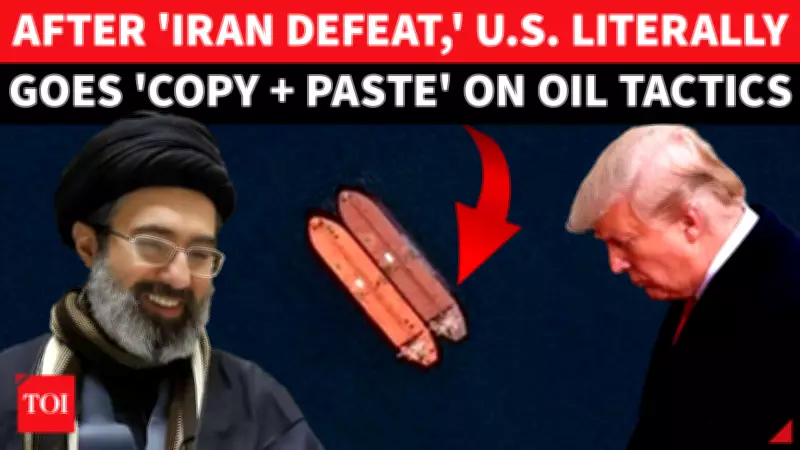
Satellites don’t lie—and what they’re exposing over the Gulf is sending shockwaves through global politics. Ship-to-ship oil transfers, once tied to Iran’s so-called shadow fleet, are now being seen in a striking new light. Dozens of coordinated tankers, lights dimmed, signals off, moving like ghosts across the Strait of Hormuz. Now, reports suggest the United States may be linked—directly or indirectly—to adopting similar transfer methods to keep oil flowing. What was once condemned as covert evasion now appears repurposed in a high-stakes energy game. In the shadows of the sea, the rules are being rewritten in real time.
Key Details from the Satellite Evidence
Recent satellite imagery has captured a series of suspicious activities in the Gulf region. Multiple tankers were observed engaging in ship-to-ship transfers during nighttime hours, with their navigation lights turned off and transponders disabled. These are hallmark tactics of Iran’s shadow fleet, which has long been used to circumvent international sanctions. However, the new evidence indicates that similar methods are now being employed by vessels linked to the United States.
Implications for Global Energy Politics
This development marks a significant shift in the geopolitical landscape. The US has historically condemned Iran’s use of covert oil transfers as a violation of international norms. Yet, these satellite images suggest that Washington may be adopting the same playbook to secure its own energy supplies amid heightened tensions. Analysts warn that this could undermine US credibility and escalate conflicts in the region.

Reactions from International Observers
Experts and policymakers have expressed alarm over the revelations. Some argue that the US is being forced into such tactics due to supply chain disruptions and sanctions on other oil-producing nations. Others see it as a dangerous precedent that could legitimize covert operations worldwide. The Strait of Hormuz remains a critical chokepoint for global oil trade, and any shift in behavior there has far-reaching consequences.
As more satellite data becomes available, the full extent of these operations may come to light. For now, the world watches as the lines between sanctioned and sanctioned behavior blur in the high-stakes game of energy dominance.