

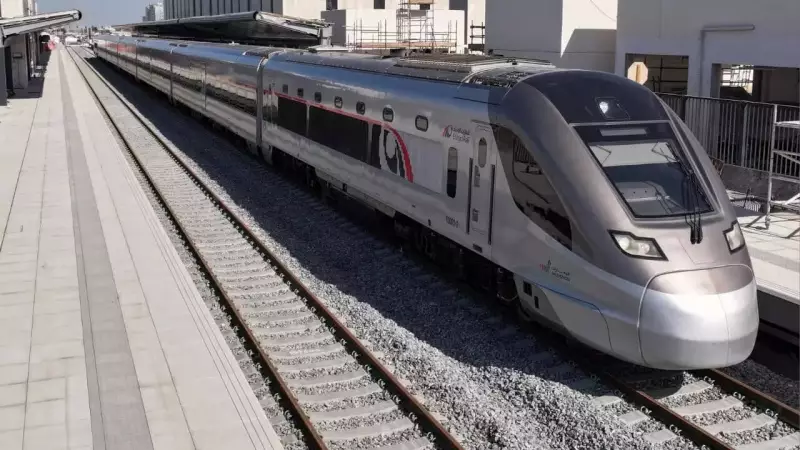
The United Arab Emirates is poised to redefine its national landscape with the imminent launch of the Etihad Rail passenger service. Slated to commence operations in 2026, this ambitious project marks the country's first integrated national passenger rail network, promising a seismic shift from road-dependent travel to a faster, safer, and more sustainable alternative.
Network and Stations: Connecting the Heart of the Emirates
Spanning from Al Sila in the west to Fujairah on the east coast, the rail network will seamlessly connect all seven emirates. The service is built around 11 strategically located passenger stations, designed to serve a diverse range of hubs including major urban centres, remote desert communities, coastal towns, and key educational districts.
The stations are meticulously planned to integrate with local ecosystems. For instance, Jumeirah Golf Estates station in Dubai will offer direct connectivity to the Dubai Metro Red Line, while University City in Sharjah will cater to thousands of students and staff. The eastern terminus at Sakamkam (Al Hilal) in Fujairah will link the picturesque coast to the national grid, and Al Sila station, near the Saudi border, is poised to become a crucial node for future cross-border travel.

Revolutionising Travel Times and Onboard Experience
The most immediate benefit for residents will be the dramatic reduction in travel time. Operating at speeds of up to 200 km/h, Etihad Rail will liberate commuters from the congestion of highways like E11 and E311. A journey between Abu Dhabi and Dubai is projected to take approximately 57 minutes, with a high-speed option potentially cutting it to just 30 minutes. Travel from Abu Dhabi to Fujairah will be slashed to about 105 minutes, transforming cross-emirate commutes.
The passenger experience is designed for comfort and productivity. The fleet, manufactured by Spain's CAF, will accommodate up to 400 passengers per train. Travelers can choose from First Class, Business Class, and Economy Class, with amenities rivaling airline cabins. Every seat will feature charging ports and high-speed Wi-Fi. Advanced climate control systems will ensure a cool journey despite the desert heat, and a selection of food and beverages will be available onboard.
A Door-to-Door Journey and National Impact
Etihad Rail's vision extends beyond the tracks, focusing on "first and last-mile" connectivity. This integrated approach combines trains with metro links, bus terminals, and taxi zones at major stations. A commuter from Sharjah could take a bus to University City station, board a train to Abu Dhabi, and reach their office in under 90 minutes—all while working or relaxing seamlessly.
The project is a cornerstone of the "UAE Projects of the 50" initiative. It aims to foster unprecedented economic integration across the emirates while significantly reducing the carbon footprint of transport. Studies indicate the rail service could cut carbon emissions by 70-80% compared to road transport.
Shadi Malak, CEO of Etihad Rail, emphasized the broader mission: "Our goal is to create a network that is safe, efficient, and sustainable. This is not just about transportation; it’s about enhancing the quality of life for every citizen and resident in the UAE." With infrastructure complete and testing underway, the arrival of the first passenger trains on UAE soil in early 2026 signals that the nation's railway era has truly begun.






