UAE Leaders' Public Mall Visits Reassure Anxious Residents Amid Regional War Tensions
As the Iran-US-Israel war continues to escalate regional tensions in the Middle East, residents across the United Arab Emirates have been grappling with persistent anxiety over their safety and livelihoods. In this climate of uncertainty, the UAE's top leadership has taken a remarkable step to project calm and stability through highly visible public appearances.
Presidential Presence in Public Spaces
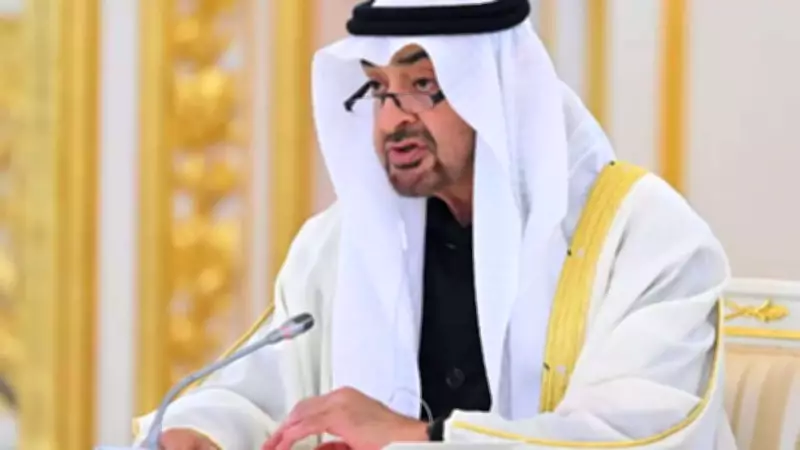
UAE President Sheikh Mohamed bin Zayed Al Nahyan made a viral appearance at Dubai Mall, where he was photographed breaking his fast alongside ordinary visitors. According to reports from Khaleej Times, the President mingled spontaneously with shoppers, stopping for conversations and even sharing coffee in warm, unscripted moments that surprised many present.
This followed a similar public engagement by Sheikh Mohammed bin Rashid Al Maktoum, Vice President, Prime Minister and Ruler of Dubai, who ended his fast at Al Majlis in Madinat Jumeirah while sitting alongside members of the public on Tuesday.

The Psychology of Leadership in Crisis
According to Dr. Jais Adam Troian, Assistant Professor of Psychology at Heriot-Watt University Dubai, such public appearances represent powerful psychological interventions during what experts term "social dilemmas." Research indicates that leaders serve as "belief managers" during crises, directly influencing public responses to collective anxiety and potential panic behaviors.
"By appearing in public spaces like malls, the UAE's leaders signal stability, reinforcing trust and discouraging panic," explained Dr. Troian. "Their calm demeanour helps shift public focus from individual fear to collective resilience, mitigating anti-social behaviours like stockpiling or hoarding." When leaders project calm and focus, they shape public beliefs and reduce fear-driven actions, with people naturally modeling their behavior after these strategic interventions.
Emotional Barometers in Uncertain Times
Other experts have emphasized the profound significance of these leadership actions. Aseel A. Takshe, Acting Dean of the School of Health Sciences and Psychology at Canadian University Dubai, noted that humans naturally look to leaders as emotional "barometers" during uncertain situations.
"For many, especially families and children, seeing leadership in a familiar space like a mall or metro makes the abstract idea of 'national stability' feel personal, local, and close to home," Takshe added. These appearances silently communicate to residents that everyday life can continue normally despite regional conflicts.
Context of Regional Anxiety
The United Arab Emirates has reported three fatalities in the ongoing war between Iran, the United States, and Israel. Numerous videos showing missiles being intercepted in regional skies and fragments landing across the area have generated immense security concerns among residents. Additionally, airspace closures have stranded many foreign nationals with uncertain return timelines, compounding the psychological pressure.
Sebastien Bedu, General Manager for the Middle East at International SOS, explained: "At a moment when many residents were seeking reassurance, seeing national leaders walking among the public, engaging warmly with families and dining in a crowded mall projected a powerful message: everyday life in the UAE remains steady and secure."
These leadership appearances represent a calculated response to genuine public concerns, leveraging psychological principles to maintain social order and morale during a period of significant regional instability.