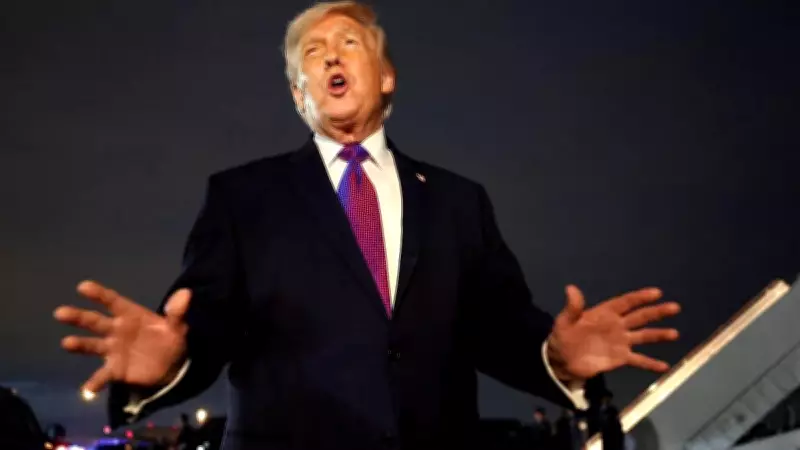
Trump Declares US Military Readiness Amid Rising Iran Tensions
Former United States President Donald Trump has publicly stated that the United States is in "very good shape" regarding a potential war with Iran, specifically highlighting strategic concerns about the Strait of Hormuz. This declaration comes amidst escalating tensions in West Asia, where Iran's Islamic Revolutionary Guard Corps has issued a stark warning about blocking oil shipments from the Gulf region.
Iran's Revolutionary Guard Issues Oil Blockade Threat
The Islamic Revolutionary Guard Corps of Iran has explicitly stated that it would move to block all oil shipments from the Gulf unless attacks by the United States and Israel cease immediately. This threat directly targets one of the world's most critical maritime chokepoints, the Strait of Hormuz, through which approximately one-fifth of global oil exports pass daily. The Guard's statement represents a significant escalation in regional hostilities and underscores Iran's willingness to leverage its geographical position to exert pressure on international adversaries.
Trump's Assessment of US Military Preparedness
In response to these developments, Donald Trump emphasized the United States' military readiness, asserting that the country is well-positioned to handle any conflict scenario with Iran. His comments reflect ongoing US strategic interests in maintaining freedom of navigation through the Strait of Hormuz, a vital artery for global energy supplies. Trump's statement also suggests continued US focus on countering Iranian influence in the region, a policy that has persisted through multiple administrations.

- The threat to block Gulf oil shipments could trigger immediate global economic repercussions, potentially spiking oil prices and disrupting energy markets worldwide.
- Trump's confidence in US military preparedness indicates potential for increased US naval presence in the Persian Gulf to secure shipping lanes.
- The situation highlights the fragile security dynamics in West Asia, where proxy conflicts and direct confrontations between regional powers and global actors remain a constant risk.
- Iran's use of oil as a geopolitical weapon demonstrates its strategy of asymmetric warfare against more conventionally powerful adversaries like the United States and Israel.
Historical Context and Current Developments
This latest exchange occurs against a backdrop of long-standing animosity between Iran and the United States, exacerbated by recent military actions and political rhetoric. The Strait of Hormuz has frequently been a flashpoint in US-Iran relations, with previous incidents involving tanker seizures and naval confrontations. Trump's remarks, while not representing current official US policy given his former presidential status, carry significant weight in shaping public discourse and potentially influencing strategic calculations in both Tehran and Washington.