

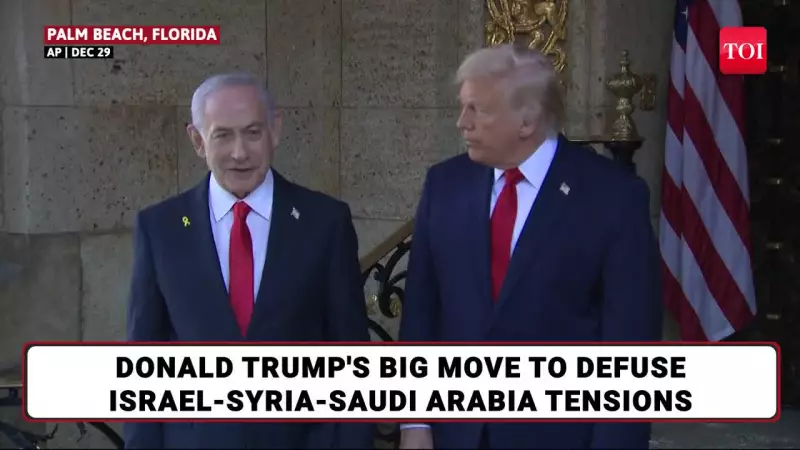
In a significant diplomatic development, former US President Donald Trump has projected a future of cooperation between Israel and its regional neighbours, Syria and Saudi Arabia. This announcement followed his high-profile meeting with Israeli Prime Minister Benjamin Netanyahu, striking an optimistic note amidst escalating military tensions in the Middle East.
Trump's Bold Prediction Amidst Regional Friction
The statement from Trump arrives at a critical juncture. It comes directly in the wake of a deadly Israeli military strike last month on the town of Beit Jinn, located near the Syrian capital of Damascus. The attack resulted in the deaths of 13 people, drawing sharp condemnation from across the region and reigniting fears of a broader conflict.
Saudi Arabia, a key player whose stance is pivotal for any normalisation process in the region, issued a stern warning to Washington. The Kingdom explicitly stated that Israel's continued policy of airstrikes, military incursions, and territorial expansion inside Syrian territory is actively damaging any prospects for diplomatic normalisation. Riyadh's position underscores the severe diplomatic fallout from the recent hostilities.

The Context: A Region on Edge
The backdrop to Trump's "they'll get along" prediction is a landscape marked by violence and diplomatic warnings. The strike on Beit Jinn is not an isolated incident but part of a pattern of actions that have kept the Israel-Syria border zone volatile. Saudi Arabia's direct condemnation of Tel Aviv and its warning to the United States highlights the growing Arab concern over Israeli military operations beyond its borders.
This complex scenario places Trump's post-meeting comments in stark contrast to the on-ground reality. His assertion suggests a belief in a diplomatic pivot, potentially based on discussions with Netanyahu, even as military actions threaten to derail such efforts. The gap between the optimistic political forecast and the current state of hostilities presents a major challenge for regional stability.
Implications and the Road Ahead
Trump's announcement, made on December 30, 2025, injects a new variable into the already complicated Middle East equation. While it projects a future of eased tensions, the immediate path is fraught with obstacles. The success of any such normalisation push would critically depend on a cessation of hostile actions and a willingness from all involved parties to engage in dialogue.
The key factors to watch now include Israel's future military posture towards Syria and the subsequent reactions from both Riyadh and Damascus. Whether Trump's prediction serves as a catalyst for back-channel diplomacy or remains merely a rhetorical gesture will be determined by the actions that follow this high-stakes political statement. The world watches to see if this forecast of cooperation can overcome the recent legacy of conflict.






