

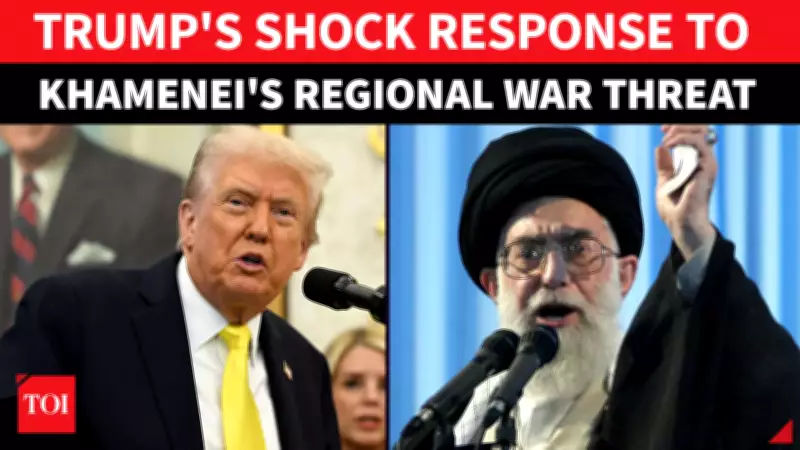
Trump Dismisses Khamenei's Regional War Warning, Maintains Hope for Iran Deal
In a significant development in Middle East geopolitics, US President Donald Trump has publicly dismissed a stark warning from Iran's Supreme Leader Ayatollah Ali Khamenei about the potential for a wider regional war. The exchange occurred on Sunday, February 2, 2026, as diplomatic efforts between the two nations remain stalled, keeping tensions at a critical high.
Khamenei's Stern Warning and Trump's Response
Ayatollah Ali Khamenei issued a clear caution that any US military strike against Iran could escalate into a broader regional conflict, highlighting the fragile state of security in the Middle East. This statement comes amid ongoing deadlock in negotiations, with both sides holding firm positions on issues of regional stability and nuclear capabilities.
Responding to these comments, President Trump downplayed the warning but simultaneously reinforced Washington's military posture in the region. Trump emphasized that US forces have deployed powerful naval assets nearby, showcasing America's readiness to protect its interests. However, in a notable shift, he expressed optimism that a negotiated settlement could still be achieved, stating his hope for a diplomatic resolution.

The Stalemate and Future Prospects
The United States and Iran continue to be locked in a tense standoff, with security concerns and regional influence at the core of the dispute. Trump reiterated that the outcome now hinges on a critical decision: whether the two nations can reach a deal or if confrontation will follow. This underscores the high stakes involved, as the situation remains volatile with potential global implications.
The exchange highlights the complex dynamics of US-Iran relations, where military posturing coexists with diplomatic overtures. Observers note that while Trump's dismissal of Khamenei's warning may signal confidence, his call for a deal suggests a willingness to engage, albeit under stringent conditions.
Broader Context and Regional Implications
This incident is part of a larger pattern of interactions between the US and Iran, which have seen periods of heightened tension and sporadic dialogue. The deployment of US naval assets serves as a reminder of America's strategic presence in the region, aimed at deterring aggression and ensuring stability.
- Iran's leadership has consistently warned against external threats, framing them as provocations that could lead to wider conflict.
- Trump's administration has balanced a tough stance on Iran with occasional expressions of openness to negotiation.
- The stalled diplomacy reflects deep-seated disagreements on issues such as nuclear proliferation and regional proxy wars.
As the situation evolves, the international community watches closely, aware that any miscalculation could have far-reaching consequences for peace and security in the Middle East and beyond.






