

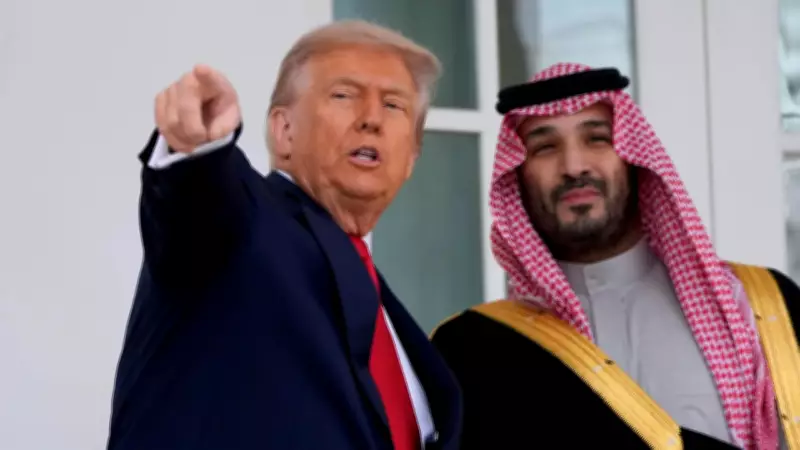
Saudi Crown Prince Privately Pushes Trump for Sustained Military Action Against Iran
As the Middle East conflict enters its fourth week, a significant development has emerged with Saudi Arabia's Crown Prince Mohammed bin Salman reportedly urging US President Donald Trump to continue military operations against Iran. According to a New York Times report, the crown prince has described the ongoing war as a critical moment to fundamentally reshape the regional power dynamics.
Historic Opportunity to Remake the Middle East
In recent discussions with President Trump, Prince Mohammed has pushed for sustained pressure on Iran, arguing that the US-Israel military campaign presents what he called a "historic opportunity" to remake the Middle East. The Saudi leader has conveyed that Iran poses a long-term existential threat to Gulf nations that can only be addressed by removing its current government from power.
These private urgings come at a time when the conflict has escalated dramatically, raising serious concerns about regional stability, global energy markets, and the potential for a prolonged war that could engulf multiple nations. While Israeli Prime Minister Benjamin Netanyahu has long viewed Iran as a strategic threat, analysts note that Saudi Arabia's concerns differ significantly, particularly regarding the risks posed by a destabilized or failed Iranian state.

Public Denials Contrast with Private Positions
Despite these reported private discussions, Saudi Arabia has publicly denied pushing for an extension of the war. In an official government statement, Saudi authorities declared: "The kingdom of Saudi Arabia has always supported a peaceful resolution to this conflict, even before it began. Our primary concern today is to defend ourselves from the daily attacks on our people and our civilian infrastructure."
The statement further emphasized: "Iran has chosen dangerous brinkmanship over serious diplomatic solutions. This harms every stakeholder involved but none more than Iran itself." This creates a striking contrast between Saudi Arabia's public diplomatic posture and the more aggressive private positions reportedly being communicated to American leadership.
Economic and Security Consequences Mount
The war has already inflicted serious economic and security consequences on Saudi Arabia. Iranian missile and drone attacks, launched in retaliation for US-Israel strikes, have disrupted global oil markets and threatened critical infrastructure throughout the kingdom. The strategically vital Strait of Hormuz, through which approximately 20% of global oil supplies pass, has been severely affected, impacting exports from Gulf countries including Saudi Arabia, the United Arab Emirates, and Kuwait.
Prince Mohammed has reportedly argued in favor of stronger military action, including targeting Iran's energy infrastructure and has even suggested the possibility of ground operations to weaken the government in Tehran. These proposals come despite the complex dilemma Saudi Arabia faces: while it may see strategic advantages in weakening its regional rival, the kingdom remains highly vulnerable to the instability that could result from such actions.
Vision 2030 Economic Ambitions at Risk
Saudi Arabia's broader economic transformation plans, particularly the ambitious Vision 2030 initiative, could be jeopardized if the conflict continues to escalate. A prolonged war could deter foreign investment, disrupt energy exports that form the backbone of the Saudi economy, and strain financial resources at a critical moment when the country is undertaking major economic reforms to diversify beyond oil dependence.
Past attacks, including the devastating 2019 strike on Saudi oil facilities that temporarily halved the kingdom's production, have demonstrated Saudi Arabia's vulnerability to Iranian retaliation. This historical context adds complexity to the current situation as decision-makers weigh potential gains against significant risks.

Mixed Signals from Washington
President Trump has alternated between signaling possible de-escalation and hinting at further military escalation. In a recent Truth Social post, the American president claimed there had been "productive conversations regarding a complete and total resolution of our hostilities." This statement suggests diplomatic channels remain active even as military operations continue.
The situation remains fluid with multiple stakeholders including Gulf allies, Israel, Iran, and the United States all navigating complex strategic calculations. As the conflict enters its second month, the tension between private advocacy for military action and public calls for diplomatic solutions continues to shape the evolving dynamics of this critical Middle Eastern confrontation.





