

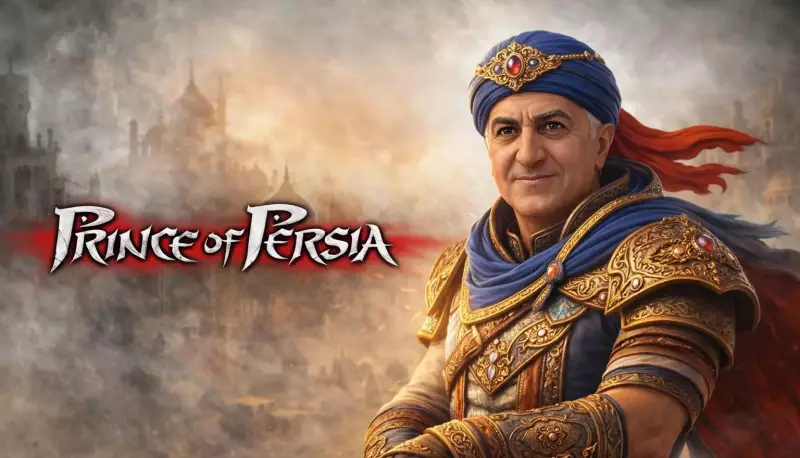
In a nation grappling with profound internal crisis, a decades-old question posed by author Frederick Forsyth has gained startling new relevance: what happens when a country's central, unifying symbol falls? For Iran, where the Ayatollah's authority faces sustained pressure, the search for a new icon has unexpectedly turned towards its past—specifically, towards Reza Pahlavi, the exiled son of Iran's last Shah.
The Theory of the Icon and Iran's Present Crisis
Frederick Forsyth, in his novel Icon, articulated a cold truth about nations. He argued that all countries need a powerful symbol or person to which a disparate population can cleave, fostering a sense of shared identity and unity. Without this, societies risk fracturing into internal conflict. The warning is stark: destroy that icon, and chaos or civil war can follow unless a better one is introduced.
This fiction now mirrors a potential reality in Iran. For over four decades, the Ayatollah has functioned as the Islamic Republic's central icon, embodying its moral and revolutionary legitimacy. However, widespread protests and sustained public dissent indicate that this symbol's power to unite has dramatically thinned. Fear persists, but loyalty has eroded, pushing the Iranian question beyond mere regime reform into a deeper, more dangerous territory: if this icon falls, what or who can replace it?

Reza Pahlavi: From Crown Prince to Exiled Symbol
Born in Tehran in 1960, Reza Pahlavi was raised as the heir to the Peacock Throne, his destiny seemingly fixed. That future was obliterated by the 1979 Islamic Revolution. While training as a fighter pilot in the United States, the monarchy collapsed. His father, the Shah, died in exile in Egypt, and the crown prince never returned to an Iran that had abolished the monarchy itself.
Pahlavi settled in the United States, studied political science, and for years avoided positioning himself as an alternative leader, aware of Iran's deeply divided memory of the Pahlavi era. The revolution did not lead to a pluralist republic but to a system where ultimate authority was vested in clerical institutions, civil society contracted, and women's rights became a permanent battleground.
Why His Name Resurfaces Now: Rejection and the Search for Unity
In recent waves of unrest, chants invoking the Pahlavi name have been heard inside Iran. Analysts and international reports, including those in the Financial Times and The Guardian, suggest these are often less a call for royal restoration and more a potent act of rejection—a signal that clerical authority no longer defines Iranian identity for many.
Pahlavi himself has shifted his public stance with the changing climate. Moving from earlier restraint, he now speaks of a potential transitional role. On June 23, 2025, at a Paris press conference, he stated he was prepared to help guide a transitional phase if the Islamic Republic collapsed, while explicitly rejecting a simple personal restoration. "This is not about restoring the past," he said. "It's about securing a democratic future for all Iranians." He advocates for a national referendum to let the people choose Iran's future political system.
The Doubts and the Weight of Civilisation
Icons unite, but they also divide by carrying history. For some Iranians, Reza Pahlavi's name evokes a secular, pre-theocratic Iran. For others, it recalls the censorship and secret police of the SAVAK. His decades in exile complicate his credibility, and a deep anxiety persists: Iran has already replaced one unelected authority with another. Many fear a mere substitution, not a genuine transformation.
This debate taps into Persia's ancient civilisational identity, which predates Islam, monarchy, and the modern republic. As one of the world's oldest continuous civilisations, Iranians often reach into their deep past when the present collapses. In this context, Pahlavi's name carries not just monarchy, but the weight of Persia itself—something older and broader than the current revolutionary state.

The open question remains whether Reza Pahlavi will ever return to Iran or govern. He may never command enough trust to be more than a symbol. Yet, his re-emergence in the public imagination is an unmistakable signal. Iran is actively searching for cohesion and a new unifying force as the old icon crumbles. Persia has survived empires and revolutions for millennia. It will survive this moment, too. Whether the Prince of Persia can help usher it into a new democratic future is a story still being written.





