

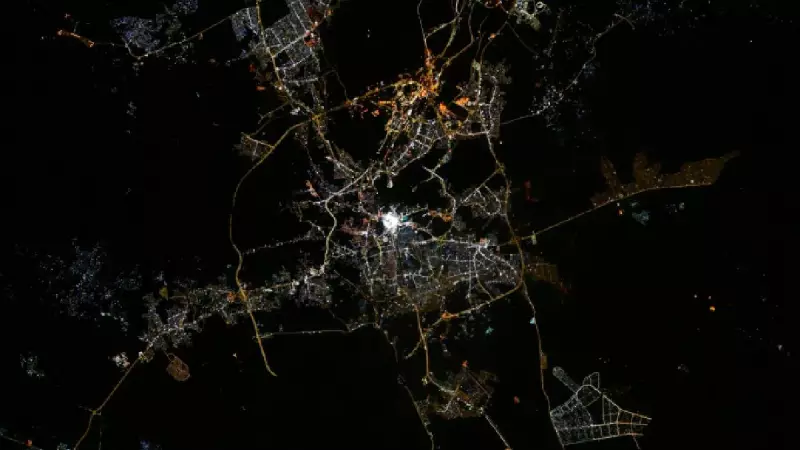
A breathtaking new perspective of Islam's holiest site has been shared from the heavens. NASA astronaut Don Pettit, currently aboard the International Space Station, has captivated the world by sharing a stunning orbital photograph of Mecca, with the illuminated Kaaba at its heart.
A Celestial View of the Holiest Site
The remarkable image, posted on December 4, 2025, offers a view few have ever witnessed. Taken from the unique vantage point of low Earth orbit, the photograph shows the city of Mecca at night. The intricate network of city lights spreads out like a golden web against the dark Arabian landscape. At the center of this luminous expanse lies the Masjid al-Haram, the Grand Mosque, with the Kaaba clearly distinguishable as a focal point of light within its courtyard.
Don Pettit, a veteran astronaut on his fourth spaceflight, is known for his exceptional photography skills and his ability to share the experience of living in space. This particular image is part of his ongoing series documenting Earth's cities and landmarks from the ISS. The photo quickly gained immense traction online, resonating deeply with a global audience.

The Significance of the Kaaba and the ISS Perspective
The Kaaba, a cubic structure draped in a black silk cloth, is the most sacred site in Islam. It is the qibla, the direction toward which Muslims around the world face during their five daily prayers. The act of capturing this site from space is profoundly symbolic, merging human achievement in space exploration with deep spiritual and cultural significance.
Photographing specific locations from the ISS is a complex task. The station travels at approximately 28,000 kilometers per hour, completing an orbit around Earth every 90 minutes. This means astronauts have only a fleeting moment to frame and capture a specific city. Pettit's successful capture of Mecca highlights not only technical precision but also a thoughtful selection of subjects that hold universal importance.
The International Space Station has been a hub for scientific discovery and international cooperation for over two decades. Its continuous human presence has provided us with countless images of our planet, fostering a sense of global connection and highlighting Earth's fragility. This image of Mecca adds a powerful cultural and spiritual dimension to that legacy.
Reactions and the Power of Orbital Imagery
The public reaction to the photograph has been overwhelmingly positive. Social media users from diverse backgrounds have expressed awe at the beautiful and peaceful image. Many have noted how the photograph emphasizes the unity of humankind, showing a site central to the lives of over 1.8 billion Muslims as a point of light on the shared planet we all inhabit.
Such images serve a purpose beyond aesthetics. They are valuable tools for Earth observation and education, helping scientists study urban development, light pollution, and geographical features. Furthermore, they inspire people by offering a literal "big picture" view, reminding us of our shared home and common heritage.
Don Pettit's photograph of Mecca joins a historic collection of iconic orbital images, such as views of the Great Pyramids, the Amazon River, and the glittering coastlines of continents at night. It stands out as a poignant reminder of how technology can bridge the gap between the scientific and the spiritual, offering a moment of reflection and wonder for people across the globe.






