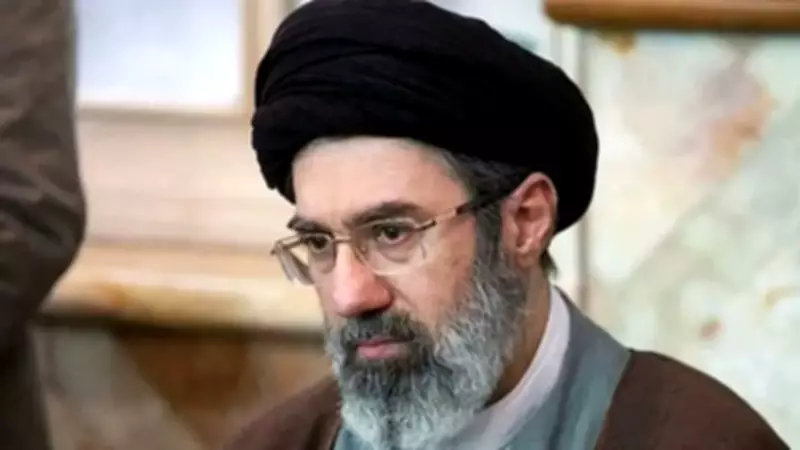
Explained: Who is Mojtaba Khamenei, the Frontrunner to Be Iran's Next Supreme Leader?
In the intricate and often secretive world of Iranian politics, the question of succession to the supreme leadership is a matter of intense global interest. As Ayatollah Ali Khamenei, the current supreme leader, advances in age, attention has increasingly turned to his second-eldest son, Mojtaba Hosseini Khamenei, who is widely regarded as a leading contender for this pivotal role. This explainer delves into the background and significance of Mojtaba Khamenei, a figure poised to potentially shape Iran's future.
Early Life and Background
Mojtaba Hosseini Khamenei was born in 1969 in Mashhad, one of Iran's holiest cities, renowned for its religious and cultural heritage. As the son of Ayatollah Ali Khamenei, who has served as Iran's supreme leader since 1989, Mojtaba grew up in an environment steeped in political and theological influence. His birth in Mashhad, a center of Shia Islam, underscores the deep religious roots that characterize his family's legacy and Iran's governance structure.
Rise to Prominence
Over the years, Mojtaba Khamenei has gradually emerged from the shadow of his father to become a significant figure in his own right. While details of his early career are often shrouded in secrecy, he is known to have been involved in various religious and political circles within Iran. His proximity to the supreme leader has afforded him unique insights into the workings of the Iranian state, including its complex relationships with entities like the Iranian Revolutionary Guards and its navigation of international sanctions.

Key aspects of his profile include:
- Family Ties: As the son of Ayatollah Ali Khamenei, Mojtaba benefits from a direct lineage that holds considerable sway in Iran's theocratic system, where familial connections can play a crucial role in leadership transitions.
- Political Influence: He has been associated with influential networks within Iran, potentially positioning him to garner support from key power brokers, including military and religious elites.
- Global Attention: His potential candidacy has sparked widespread speculation in world news, as international observers monitor how Iran's leadership dynamics might evolve amid ongoing geopolitical tensions.
Implications for Iran and Beyond
The prospect of Mojtaba Khamenei ascending to the supreme leadership carries profound implications for Iran's domestic and foreign policies. If he succeeds his father, it could signal continuity in Iran's conservative stance, particularly regarding issues like nuclear negotiations, regional conflicts, and adherence to Islamic principles. However, it might also introduce new dynamics, given his relatively younger age and potential to modernize certain aspects of governance while maintaining ideological rigor.
In the broader context, this succession question is critical for understanding Iran's future trajectory. As the country grapples with economic challenges, such as sanctions, and navigates complex international relations, the choice of supreme leader will be pivotal. Mojtaba Khamenei's background suggests he could uphold the revolutionary ideals that have defined Iran under his father's rule, but his exact policies remain a subject of intense debate and analysis.
In summary, Mojtaba Khamenei stands as a frontrunner in the race to become Iran's next supreme leader, with his birth in Mashhad and familial ties providing a strong foundation for his candidacy. As the world watches closely, his potential rise underscores the enduring significance of leadership transitions in shaping global politics and Iran's role on the international stage.