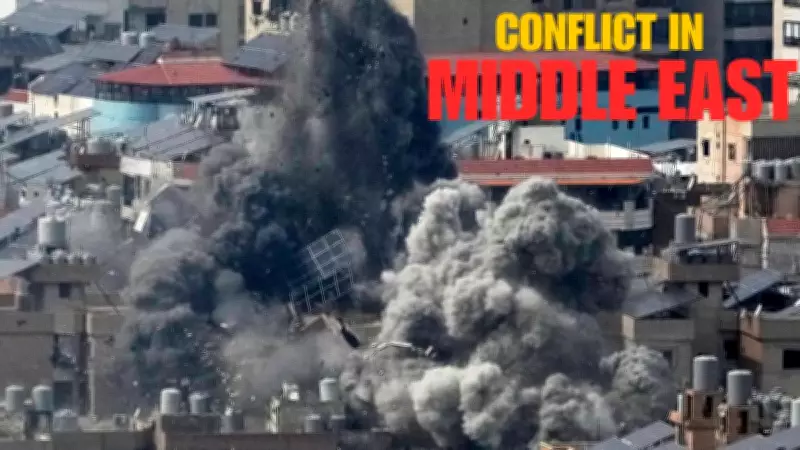
Middle East Tensions Escalate as US, Israel, Iran Conflict Enters Eighth Day
The ongoing conflict between the United States, Israel, and Iran has now entered its eighth consecutive day, with tensions in the Middle East and West Asia continuing to intensify. This prolonged confrontation has sparked widespread international concern, as military actions and geopolitical maneuvers threaten to destabilize the entire region.
Drone Attacks Target Military Bases in Gulf Countries
In a significant escalation, drone attacks have been reported targeting military bases in several Gulf countries. These unmanned aerial vehicle strikes have raised alarms about the expanding scope of the conflict, potentially drawing in neighboring nations and complicating diplomatic efforts. The attacks have specifically focused on strategic installations, highlighting the use of advanced technology in modern warfare and the vulnerabilities of regional defense systems.
Security analysts warn that these drone assaults could signal a shift towards asymmetric warfare tactics, where non-state actors or state proxies leverage low-cost, high-impact methods to challenge conventional military powers. The Gulf region, a critical hub for global energy supplies, now faces heightened risks of further incidents that could disrupt trade and security.

Oil Prices Surge Amidst Geopolitical Uncertainty
The conflict has had immediate economic repercussions, with oil prices experiencing a sharp surge due to the geopolitical uncertainty. As tensions flare in the Middle East, markets have reacted nervously, fearing potential disruptions to oil production and transportation routes. This price volatility underscores the interconnectedness of global energy markets and regional conflicts, impacting economies worldwide.
Experts note that prolonged hostilities could lead to sustained high oil prices, exacerbating inflation and affecting consumer costs in numerous countries. The situation is being closely monitored by international financial institutions and governments, who are assessing contingency plans to mitigate economic fallout.
Global Reactions and Diplomatic Efforts
International responses have been varied, with calls for de-escalation from multiple quarters. World leaders and organizations are urging restraint, emphasizing the need for dialogue to prevent a full-scale war. The conflict has also reignited debates about foreign policy strategies, particularly concerning the roles of major powers like the United States in regional disputes.
Notably, former US President Donald Trump has commented on the situation, adding a political dimension to the discourse. His remarks have sparked discussions about past and present US policies in the Middle East, influencing public and political opinions both domestically and abroad.
Key Developments in the Conflict
- Day 8 marks continued military engagements and strategic posturing by involved parties.
- Drone attacks on Gulf military bases highlight technological warfare aspects.
- Rising oil prices reflect market anxieties over regional stability.
- International diplomacy faces challenges amid escalating hostilities.
- Historical and political contexts, including references to figures like Donald Trump, shape ongoing narratives.
As the conflict progresses, the global community remains on high alert, with concerns mounting over humanitarian impacts and long-term security implications. The coming days will be crucial in determining whether diplomatic channels can prevail or if further escalation will deepen the crisis.