

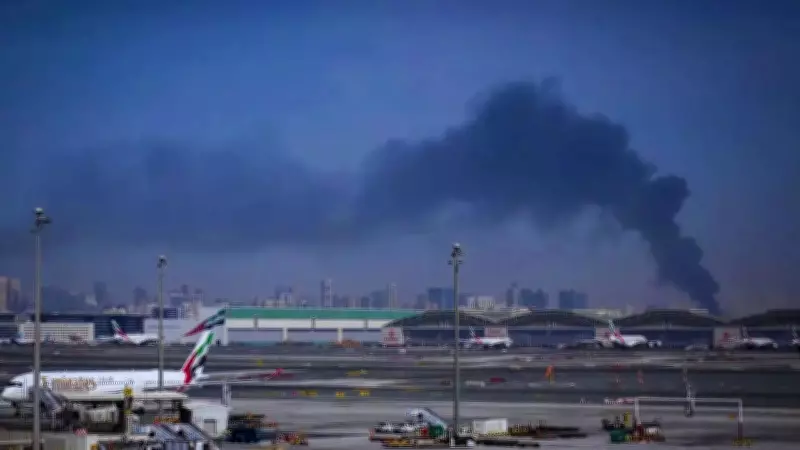
Maharashtra Residents Stranded in Middle East Amid Iran-Israel Conflict Seek Evacuation
Residents of Mumbai and various parts of Maharashtra, currently stranded in the Middle East due to the closure of airspace resulting from the escalating Iran-Israel conflict, are actively seeking assistance for evacuation through social media platforms. The crisis has prompted urgent calls for help as individuals and families find themselves trapped in countries like the United Arab Emirates (UAE).
Social Media Appeals for Government Intervention
In a heartfelt video message from Dubai, Mumbaikar Harshit Choradiya described the situation, stating, "It is 6.30pm...We can hear loud sounds of missile interceptors. Life is normal in Dubai. Traffic and Metro services are plying and people are visiting restaurants to break their Ramzan fast. We are safe but I urge the government of Maharashtra, and India, to direct maximum flights to evacuate us once the airspace reopens." Similarly, another traveller named Vrushali posted a series of messages urging a private airline and the Indian government to provide aid.
Stranded residents from Beed, Kolhapur, Dhule, and a group of 80 students from Pune have relayed similar pleas for assistance. Actress Sonal Chauhan addressed Prime Minister Narendra Modi on X, saying, "I am currently stranded in Dubai due to the ongoing crisis, with flights cancelled and no clear way to return to India. I respectfully seek the Government’s guidance for a safe journey home. Grateful for any support extended." She later confirmed on Instagram that she was safe and well.

Naitik Shah tagged Chief Minister Devendra Fadnavis and Deputy Chief Minister Eknath Shinde, stating, "I am stuck in Dubai with my family. Request you to please help us. My parents are aged and we desperately need to get out of Dubai ASAP." A Dahisar resident employed in Dubai noted that while residents remain on alert, the situation on the ground appears normal, with people stepping out as usual, though grocery prices have increased due to stockpiling of essentials.
Flight Cancellations and Airspace Disruptions
At Mumbai airport, a total of 125 flights were cancelled up to 2.30pm on Sunday. An airline official explained, "Indian carriers have suspended flights to the Middle East and to destinations like London, New York, Newark, Toronto, and Frankfurt because of routing problems. The February 28 government advisory instructs Indian carriers to avoid the airspace over Iran, Israel, Lebanon, Saudi Arabia, Bahrain, Oman, Iraq, Jordan, Kuwait, UAE, and Qatar until March 2."
Major hubs such as Dubai, Abu Dhabi, and Doha remain shut, severely impacting travel. The official added, "Close to 50% of passengers from India travel to the US through these Middle Eastern transit hubs, which are not operational currently. The next option is to pay more and fly on a nonstop flight to New York or London, but due to increased demand, seats on nonstop flights are largely unavailable for 24- to 48-hour advance booking. This leaves passengers with little choice but to book on European or African carriers and transit via Paris, Frankfurt, or Addis Ababa to reach the US. European carriers flying to and from India overfly Pakistan, Afghanistan, and then Turkmenistan, avoiding Iran and Iraq airspace, so they continue to operate."
Soaring Ticket Prices and Advisory Concerns
Ticket prices have skyrocketed to 2-3 times the normal fare. The cheapest one-way airfare from Mumbai to London or Frankfurt is priced over Rs 1.3 lakh for Monday and Tuesday, compared to the usual Rs 40,000 to Rs 60,000 on a normal day. A travel agent highlighted, "Despite the DGCA advisory, some Indian carriers continue to sell tickets on flights that would need to overfly these countries." He also mentioned that certain Middle Eastern carriers are selling tickets for travel on Monday and Tuesday despite the hubs being currently closed.
In response to the crisis, the UAE has requested local hotels to allow stranded travellers to extend their stay, with the government offering to cover their expenses. This measure aims to provide temporary relief as efforts continue to resolve the airspace issues and facilitate safe evacuations for those affected by the conflict.






