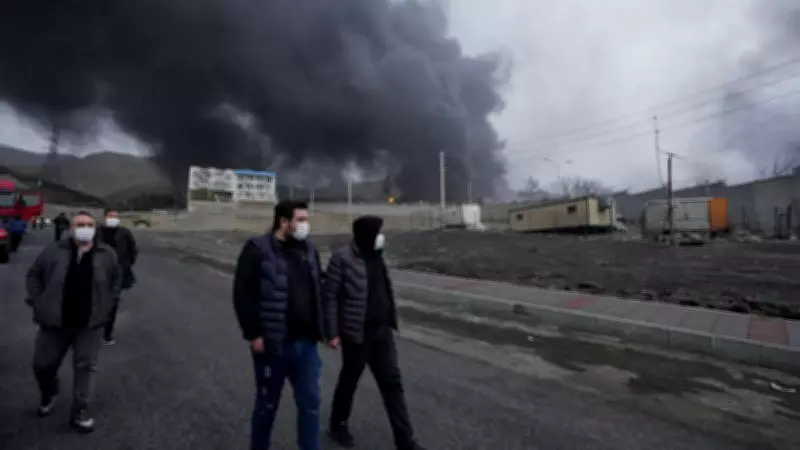
Drone Strike Ignites Blaze at Kuwait's Key Oil Refinery
In a significant escalation of regional hostilities, Kuwait has reported that a drone attack targeted one of its vital oil refineries, resulting in a substantial fire. The incident, which occurred on March 19, 2026, has been directly attributed to Iran's intensifying military campaign against Gulf Cooperation Council (GCC) nations, according to official statements from Kuwaiti authorities.
Details of the Attack and Immediate Aftermath
The assault involved an unmanned aerial vehicle (UAV) that struck the refinery facility, causing flames to erupt and prompting emergency response teams to mobilize swiftly. While specific damage assessments are still underway, initial reports indicate that the fire was contained without any reported casualties among refinery personnel or nearby residents. This event marks a concerning development in the ongoing geopolitical friction between Iran and its Gulf neighbors, highlighting vulnerabilities in critical energy infrastructure.
Iran's Role and Regional Implications
Kuwaiti officials have explicitly connected this drone strike to Iran's broader strategy of aggression, which has seen a notable uptick in recent months. This attack is viewed as part of a coordinated effort by Tehran to exert pressure on Gulf states through asymmetric warfare tactics, including the use of drones and missiles. The targeting of an oil refinery underscores the economic dimensions of this conflict, as such facilities are pivotal to Kuwait's petroleum exports and global energy markets.

Broader Context of Gulf Tensions
The drone attack occurs against a backdrop of heightened tensions between Iran and Gulf nations, including Saudi Arabia, the United Arab Emirates, and Bahrain. These countries have long accused Iran of supporting proxy militias and conducting covert operations to undermine their security. In response, Gulf states have bolstered their defense capabilities and sought international alliances to counter Iranian influence.
- Increased Drone Threats: The use of drones in this attack reflects a growing trend in regional conflicts, where such technology offers a low-cost, high-impact means of targeting strategic assets.
- Economic Impact: Fires at oil refineries can disrupt production and supply chains, affecting global oil prices and energy security.
- Diplomatic Fallout: This event is likely to prompt renewed calls for diplomatic interventions and possibly sanctions against Iran, further straining international relations.
Response and Future Outlook
Kuwait has initiated an investigation into the drone attack, with plans to enhance security measures at its oil facilities to prevent future incidents. The government is also expected to engage with regional partners and global powers to address the escalating threat from Iran. As tensions simmer, the risk of further attacks on critical infrastructure remains high, posing challenges to stability in the Gulf and beyond.
This refinery fire serves as a stark reminder of the fragile security environment in the Middle East, where energy resources are often at the heart of geopolitical struggles. Observers will closely monitor developments, as any escalation could have far-reaching consequences for international peace and economic stability.