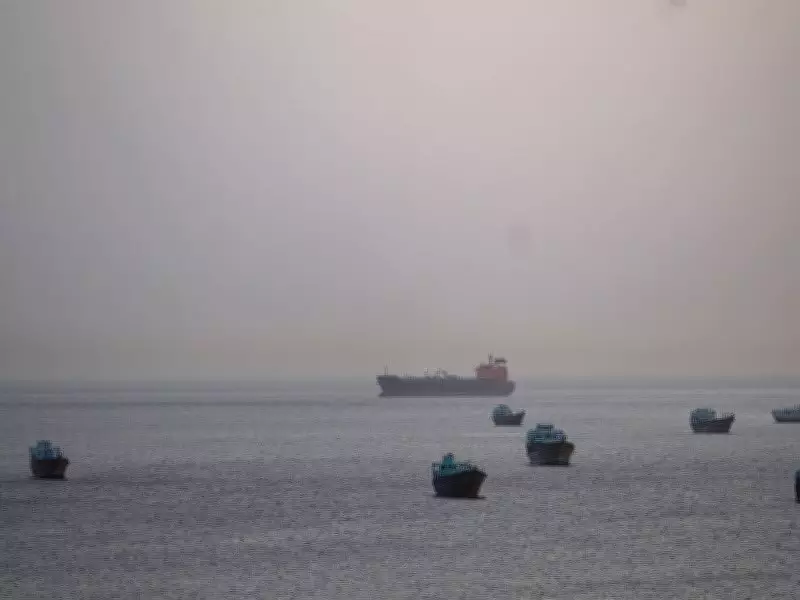
Iran's Islamic Revolutionary Guard Corps (IRGC) Navy has issued a warning to all vessels navigating the Strait of Hormuz, urging them to adhere to the designated corridor or face a 'decisive response.' The statement, released on Tuesday, underscores escalating tensions in the strategic waterway, through which about 20% of the world's oil passes.
IRGC Navy's Warning
The IRGC Navy's warning comes amid heightened military posturing in the region. The force emphasized that vessels must use the specified maritime corridor to ensure safe passage. 'Any deviation from the designated route will be considered a violation and met with a decisive response,' the statement read. The IRGC Navy also stressed that it has full control over the Strait of Hormuz and will not tolerate any breaches of security protocols.
Strategic Importance of Hormuz
The Strait of Hormuz is a vital chokepoint for global energy supplies, connecting the Persian Gulf with the Gulf of Oman. Iran has historically leveraged its position to exert influence, with past threats to close the strait in response to sanctions or military actions. The latest warning is seen as a move to reinforce Iran's dominance in the waterway amid ongoing tensions with the United States and its allies.

Iranian officials have repeatedly stated that they have no intention of closing the strait but will defend their territorial waters. The IRGC Navy's statement appears to be a reminder to commercial and military vessels to respect Iranian regulations.
Regional Reactions
The warning has drawn concern from international shipping and energy markets. The United States Fifth Fleet, based in Bahrain, has not yet commented but maintains a strong presence in the region to ensure freedom of navigation. Meanwhile, Gulf Arab states, heavily reliant on oil exports through Hormuz, are closely monitoring the situation. Analysts suggest that any disruption could lead to a spike in oil prices and global economic instability.
Previous Incidents
This is not the first time Iran has issued such warnings. In recent years, the IRGC Navy has intercepted and harassed commercial vessels, leading to increased patrols by international naval forces. The latest statement could escalate into a more direct confrontation if vessels ignore the directive.
Iran's military has been modernizing its naval capabilities, including fast attack craft and anti-ship missiles, which could be used to enforce the corridor. The IRGC Navy's warning is likely aimed at asserting control and deterring any perceived encroachment.
International Law and Freedom of Navigation
The Strait of Hormuz is considered an international waterway under the United Nations Convention on the Law of the Sea (UNCLOS), granting vessels the right of transit passage. Iran's demand for exclusive use of a designated corridor may be seen as a violation of international norms. However, Tehran argues that it is necessary for security and environmental reasons.
The international community, including the European Union and the United Nations, has called for restraint and dialogue. The IRGC Navy's warning adds to the complexity of ensuring safe passage through one of the world's most critical maritime chokepoints.
As tensions simmer, the situation remains fluid, with potential implications for global trade and regional stability. The IRGC Navy's 'decisive response' threat underscores the high stakes involved in the Strait of Hormuz.