

Iran's Revolutionary Guard Escalates Rhetorical War Over Strategic Strait
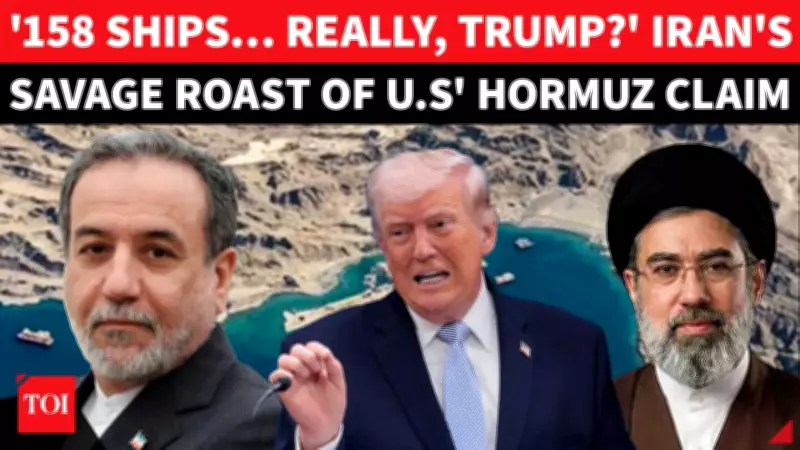
A sharp and provocative exchange of rhetoric has intensified dramatically between Iran and the United States, following Tehran's public mockery of claims made by former President Donald Trump. The situation escalated when Iran's mission in Ghana issued a strongly worded message directly questioning who truly controls the strategically vital Strait of Hormuz, a critical global oil transit route that sees approximately 20% of the world's petroleum pass through its waters daily.
Mocking Trump's Claims and Asserting Regional Dominance
Iranian officials, reportedly led by figures within the Islamic Revolutionary Guard Corps (IRGC), have gone on the offensive after Trump asserted that 158 Iranian naval vessels had been destroyed in recent operations. The Iranian response, characterized by regional observers as unusually bold and confrontational, represents a significant escalation in the ongoing narrative battle between the two nations. The message from Iran's Ghana mission specifically challenged the U.S. Navy's operational control in the region, with language that regional analysts describe as deliberately provocative.
The timing of this exchange is particularly significant, coming amid heightened tensions throughout the Middle East and increasing concerns about global energy security. Both nations appear to be escalating their positions, with neither showing willingness to de-escalate the situation through diplomatic channels. The Iranian message explicitly framed the Strait of Hormuz as "non-negotiable territory" under Iranian protection and influence, directly contradicting U.S. assertions of naval supremacy in the region.

Global Implications and Energy Security Concerns
As both sides intensify their rhetorical positions, international observers are growing increasingly concerned about the potential impact on global energy flows and the risk of accidental or deliberate military confrontation. The Strait of Hormuz serves as the primary transit route for crude oil from major producers including Saudi Arabia, Iraq, the United Arab Emirates, and Kuwait, making any disruption potentially catastrophic for global markets.
Energy analysts note that even the threat of conflict in the region typically causes oil prices to spike, as witnessed in previous periods of heightened Iran-U.S. tensions. The current exchange has already contributed to market volatility, with traders closely monitoring developments that could affect shipping security through the narrow waterway that separates the Persian Gulf from the Gulf of Oman.
Regional Power Dynamics and Military Posturing
The public challenge from Iranian forces represents more than just rhetorical sparring. It reflects deeper regional power dynamics and Iran's determination to assert its influence over what it considers its legitimate sphere of control. The Islamic Revolutionary Guard Corps, which operates independently from Iran's conventional military, has historically maintained a strong presence in the Persian Gulf and has frequently engaged in naval exercises and patrols near the Strait of Hormuz.
Military analysts point to several concerning factors in the current standoff:
- The unusually direct nature of the Iranian challenge to U.S. naval authority
- The timing amid broader regional tensions involving multiple actors
- The potential for miscalculation or accidental escalation
- The impact on commercial shipping and global energy security
This latest exchange follows a pattern of increasing assertiveness from both sides, with neither appearing willing to back down from their respective positions. The situation remains fluid and potentially volatile, with international diplomats urging restraint while preparing contingency plans should tensions escalate beyond rhetorical exchanges.






