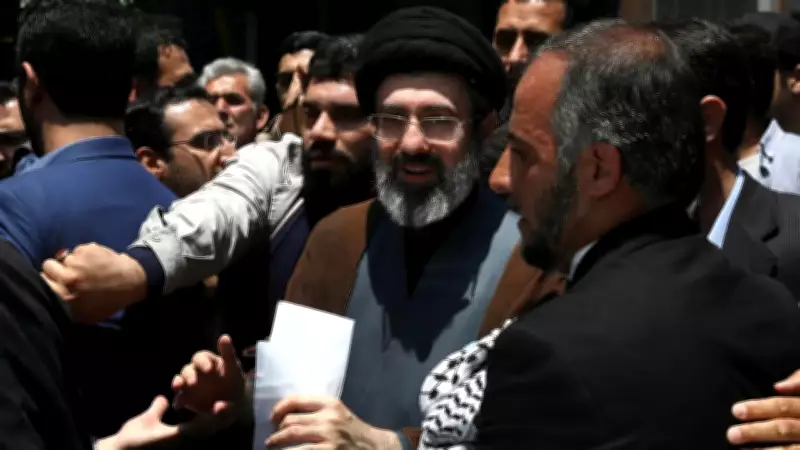
Iran's Supreme Leader Mojtaba Khamenei Reported Safe Amid War Rumors
In a significant development, Iran's newly appointed supreme leader, Mojtaba Khamenei, is confirmed to be "safe and sound" despite widespread reports suggesting he was injured during the ongoing conflict involving the United States and Israel. This reassurance comes from Yousef Pezeshkian, the son of Iranian President Masoud Pezeshkian and a government adviser, who addressed the rumors publicly.
Official Confirmation Amid Speculation
Yousef Pezeshkian stated that he sought confirmation after hearing rumors about Khamenei's injuries. In a Telegram post on Wednesday, he wrote, "I heard news that Mr Mojtaba Khamenei had been injured. I have asked some friends who had connections. They told me that, thank God, he is safe and sound." This marks the first indirect official comment on the cleric's condition since his elevation to Iran's highest political and religious role earlier this week.
The 56-year-old Mojtaba Khamenei succeeded his father, Ali Khamenei, who ruled Iran for decades and was killed in US-Israeli strikes on February 28, an event that triggered a broader regional conflict. Despite his appointment on Sunday, Mojtaba Khamenei has not made any public appearances or released statements, fueling intense speculation about his health and whereabouts as the war escalates.

Conflicting Reports and Media Coverage
Contrary to the official reassurance, a report by The New York Times cited three unnamed Iranian officials claiming that Khamenei sustained injuries, including wounds to his legs, during the attacks. The officials noted he remains alert but is sheltering in a highly secure location with limited communication. Additionally, Iranian state television has referred to him as a "wounded veteran of the Ramadan war," though it has not provided details on the nature or cause of his injuries.
The uncertainty surrounding Khamenei's condition coincides with the expansion of the Middle East conflict, now in its twelfth day. The war began with US-Israeli strikes on Iran and has since drawn in multiple regional actors, leading to increased military activities across the Gulf.
Escalating Regional Conflict
The conflict has intensified with Iranian forces launching fresh missile barrages towards Israel, while Gulf states like Saudi Arabia reported intercepting ballistic missiles and drones targeting military bases and oil facilities. Iran's Revolutionary Guards also claimed missile attacks on a United States base in Kuwait, though Kuwaiti authorities have yet to confirm this.
Key developments in the war include:
- UAE embassy in Iraq attacked, adding to regional tensions.
- Hezbollah drones targeting Israel, highlighting the involvement of proxy groups.
- US and Israel conducting what are described as 'heaviest strikes' on Iran, with Tehran ruling out any ceasefire.
- Naval incidents and drone interceptions reported across the Gulf, indicating widespread military engagement.
This ongoing situation underscores the volatile nature of the Middle East conflict, with implications for global stability and diplomacy. As the war continues, the focus remains on the leadership and resilience of Iran under its new supreme leader, Mojtaba Khamenei, whose condition and public role are closely watched by international observers.