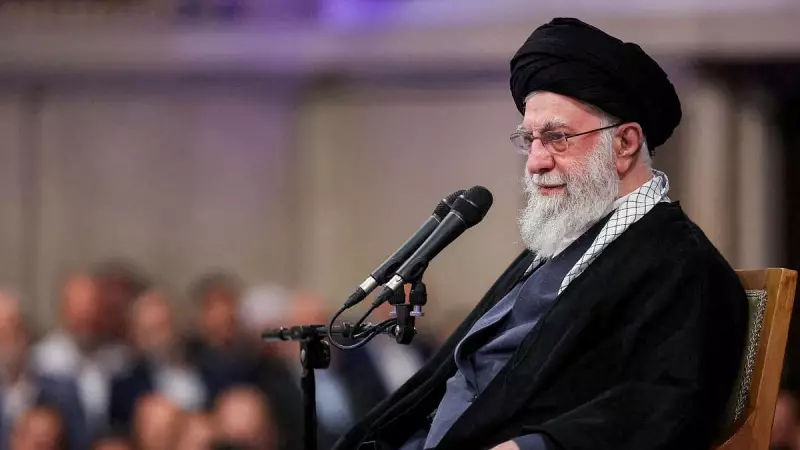
Iran's Supreme Leader, Ayatollah Ali Khamenei, has made a pointed accusation against those involved in the recent nationwide protests, claiming that rioters are acting to please former United States President Donald Trump. This statement marks a significant escalation in the Iranian leadership's rhetoric as it confronts one of the most serious challenges to its authority in years.
Khamenei's Accusation and the Context of Unrest
The remarks were delivered on Monday, October 3, 2022, during a speech to a group of students in Tehran. Khamenei directly linked the violent elements within the protests to foreign adversaries, specifically naming the former American president. "These riots and the insecurity are engineered by America and the Zionist regime, and their employees," he asserted. He went further, stating, "Some rioters and thugs are doing these things to please the American president, Mr. Trump."
This accusation comes amidst widespread demonstrations that erupted following the death of 22-year-old Mahsa Amini on September 16. Amini died in police custody after being detained by the country's morality police for allegedly violating Iran's strict hijab rules. Her death has ignited fury across Iran and sparked international condemnation, with protests calling for an end to the Islamic Republic's governance and women's rights abuses.

A Nationwide Movement and Government Crackdown
The protests, which have spanned over 80 cities across Iran, represent a broad-based movement. While initially focused on women's rights and the mandatory hijab law, the chants have rapidly evolved to target the core of the Islamic Republic's leadership. Despite the widespread and largely peaceful nature of the demonstrations, authorities have labeled them as "riots" instigated by foreign powers.
The government's response has been severe. Iranian state media reported that at least 41 protesters and police have been killed since the unrest began. However, human rights groups outside Iran suggest the death toll is significantly higher, potentially exceeding 150. Thousands have been arrested, including activists, journalists, and students, as security forces employ tear gas, batons, and live ammunition to disperse crowds.
International Reactions and the Path Forward
Khamenei's speech, invoking Donald Trump, is seen as an attempt to frame the domestic uprising as a foreign conspiracy. This narrative is a familiar tactic used by the establishment to discredit internal dissent. The reference to Trump is particularly charged, given his administration's "maximum pressure" campaign of harsh sanctions and its decision to assassinate top Iranian General Qasem Soleimani in 2020, which brought the two nations to the brink of war.
The international community has watched the events with growing concern. The United States, under President Joe Biden, has imposed new sanctions on Iran's morality police and senior security officials. Global celebrities and political figures have also voiced support for the protesters, amplifying the message of the Iranian people.
As the protests enter their third week, they show little sign of abating. The Iranian leadership, led by Khamenei, appears determined to crush the movement through force and ideological framing. The coming days will be critical in determining whether this wave of protests can sustain its momentum against a formidable state apparatus or if the government's crackdown will succeed in restoring its version of order. The world continues to witness a pivotal moment in Iran's modern history, where demands for fundamental freedoms clash with an entrenched theocratic system.