

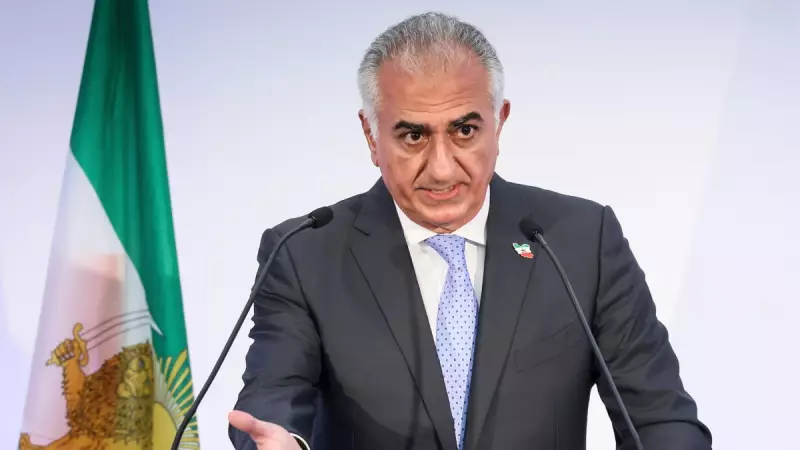
In a dramatic escalation of rhetoric, Iran's exiled Crown Prince Reza Pahlavi has issued a direct call to anti-government protesters within the country, urging them to seize control of the centres of major cities. This bold statement comes amidst a fresh wave of widespread unrest shaking the Islamic Republic.
A Direct Call to Action from Exile
The son of the late Shah of Iran, who has lived in exile since the 1979 Islamic Revolution, made this significant appeal through a video message. Reza Pahlavi directly addressed the Iranian people, stating that the time for symbolic protests has passed. He emphasized that the current movement must now aim to physically take over urban hubs to demonstrate the power and resolve of the populace against the ruling establishment.
His call to action is not made from within Iran's borders but from his position abroad, highlighting the transnational nature of the opposition to Tehran's clerical leadership. Pahlavi positioned himself as a unifying figure for the diverse protest movement, which has seen participation from various segments of Iranian society frustrated with economic hardship, political repression, and social restrictions.

Context of Escalating Unrest
This provocative statement did not emerge in a vacuum. It follows months of sustained protests across Iran, triggered by deep-seated grievances. The economic situation, plagued by inflation and unemployment, has created a tinderbox of public discontent. Furthermore, strict social codes and a perceived lack of personal freedoms have fueled anger, particularly among the youth and women.
The protests, often met with a severe security response, have shown remarkable resilience. Pahlavi's message seeks to channel this persistent energy into a more concentrated and strategic action—occupying the symbolic and practical hearts of cities. This move is seen as an attempt to shift from dispersed demonstrations to a focused challenge for control of public space.
International Reactions and Implications
The exiled prince's call will undoubtedly draw sharp reactions from the Iranian government, which has long labelled him and other exiled figures as tools of foreign adversaries. Authorities in Tehran are likely to use this statement to bolster their narrative that the protests are orchestrated from outside the country.
Internationally, governments and human rights organizations are closely monitoring the situation. The appeal to seize city centres raises the stakes significantly, potentially leading to more intense confrontations. The world watches to see if this verbal escalation will translate into a new, more volatile phase of the ongoing conflict within Iran.
The coming days will be critical. Will protesters heed Pahlavi's call and attempt to hold central squares and districts? How will the state's security apparatus respond to such a direct challenge? The answers to these questions could determine the future trajectory of Iran's largest wave of dissent in years.
One thing is clear: the political temperature in Iran has risen sharply. The exiled prince's message has thrown down a gauntlet, transforming the discourse from one of protest to one of outright confrontation for territorial control within Iran's urban landscape. The move is a high-risk strategy that could either galvanize the opposition or lead to its swift suppression.






