

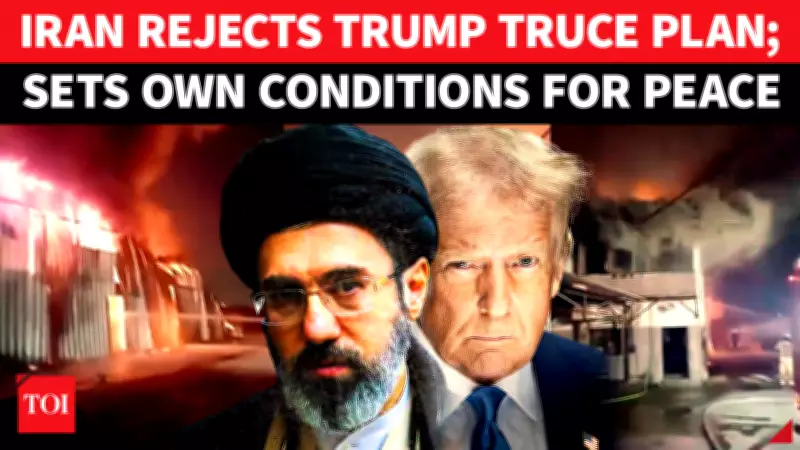
Iran Outlines Five-Point Truce Demands, Dismisses Trump's Peace Plan
In a significant diplomatic development, Iran has officially rejected former US President Donald Trump's comprehensive 15-point peace proposal, instead articulating five clear conditions for establishing a truce in what Tehran describes as an "imposed war." The Iranian response, delivered through intermediaries from Pakistan, marks a critical juncture in the ongoing tensions between the two nations.
Tehran's Five Non-Negotiable Conditions
Iran's conditions for ending hostilities are precise and multifaceted. Firstly, Tehran demands a complete and verifiable halt to all attacks and assassinations targeting Iranian interests and personnel. Secondly, the establishment of robust international mechanisms to prevent future wars and ensure long-term regional stability is required.
Thirdly, Iran insists on guaranteed reparations for damages incurred during the conflict, a point likely to involve complex financial and political negotiations. Fourthly, Tehran calls for an immediate end to hostilities across all fronts, including actions involving proxy groups in the region. Finally, and perhaps most significantly, Iran demands formal recognition of its sovereignty over the strategically vital Strait of Hormuz, a key global oil shipping lane.

Trump's Rejected 15-Point Proposal
The US proposal, submitted by the Trump administration through Pakistani intermediaries, outlined a different path to peace. Central to the plan was a 30-day ceasefire to de-escalate immediate tensions. However, the conditions attached were substantial and, from Iran's perspective, unacceptable.
The American demands included the complete dismantling of Iran's nuclear facilities, strict limits on its missile development programs, and an end to Iranian support for regional proxy groups. Additionally, the proposal required the reopening of the Strait of Hormuz to international traffic under terms favorable to Western interests, among other stipulations.
Geopolitical Implications and Regional Context
This exchange occurs against a backdrop of heightened regional instability. Iran's firm stance underscores its strategic priorities: maintaining sovereignty over critical waterways and securing reparations for perceived damages. The rejection of Trump's plan highlights the deep-seated mistrust between Tehran and Washington, with Iran viewing the US demands as infringements on its national sovereignty and security apparatus.
The involvement of Pakistan as an intermediary adds a layer of complexity, reflecting broader diplomatic maneuvering in South Asia and the Middle East. Analysts suggest that Iran's conditions, particularly regarding the Strait of Hormuz, are designed to assert its regional influence and counter perceived US hegemony.
As both sides dig in, the prospects for a swift resolution appear dim. The fundamental disagreements over nuclear capabilities, regional proxies, and maritime sovereignty suggest that negotiations, if they proceed, will be protracted and challenging. The international community watches closely, aware that the outcome could reshape security dynamics across the Middle East and beyond.






