

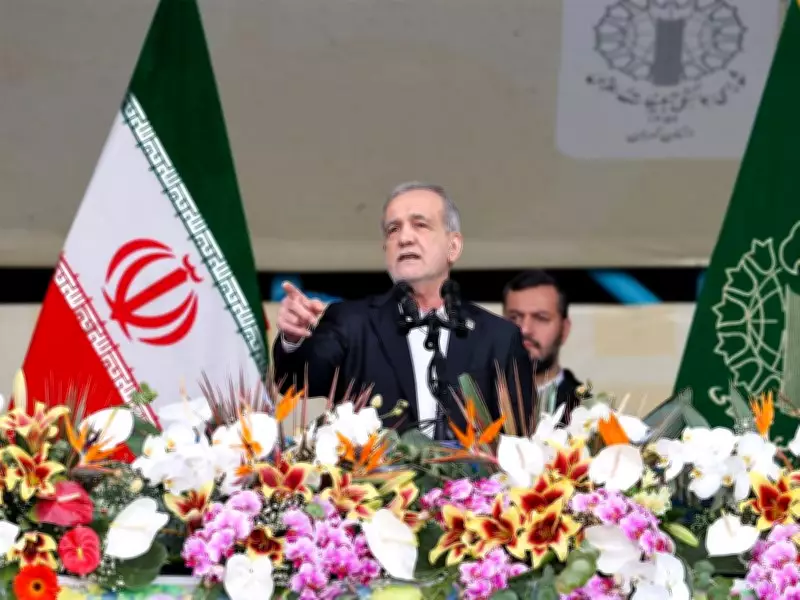
Iranian President Issues Stark Warning to Israel Over Lebanon Strikes
In a dramatic escalation of regional tensions, Iranian President Masoud Pezeshkian has delivered a blunt warning to Israel, declaring that "our fingers remain on the trigger" despite a recent ceasefire agreement. This statement comes in response to Israel's continued military strikes on Lebanon, which have persisted even after the implementation of a truce deal aimed at de-escalating hostilities.
Context of the Ceasefire and Ongoing Strikes
The warning was issued against the backdrop of a fragile ceasefire that was brokered to halt cross-border violence between Israel and Hezbollah, the Iran-backed militant group operating in Lebanon. However, reports indicate that Israeli forces have continued to conduct strikes in southern Lebanon, targeting what they describe as Hezbollah positions and infrastructure. These actions have drawn sharp criticism from Iran, a key supporter of Hezbollah and a vocal opponent of Israeli policies in the region.
President Pezeshkian's remarks underscore Iran's unwavering commitment to its allies and its readiness to respond militarily if provoked. He emphasized that Iran is closely monitoring the situation and will not hesitate to act if Israel's strikes threaten regional stability or Iranian interests. This stance reflects Iran's broader strategy of projecting power and influence across the Middle East, particularly through proxy groups like Hezbollah.

Implications for Regional Security
The Iranian president's warning has significant implications for regional security, as it raises the specter of a broader conflict involving multiple state and non-state actors. Analysts note that Iran's military capabilities, including its missile arsenal and drone technology, pose a direct threat to Israel, which has long viewed Iran as an existential enemy. Israel, for its part, has repeatedly stated its right to defend itself against attacks from Hezbollah and other Iranian proxies.
Despite the ceasefire deal, the persistence of Israeli strikes in Lebanon suggests that underlying tensions remain unresolved. The situation is further complicated by domestic political dynamics in both Israel and Iran, where hardline factions may be pushing for a more aggressive posture. International observers are urging restraint and diplomatic engagement to prevent a full-scale war that could destabilize the entire region.
International Reactions and Diplomatic Efforts
In response to the escalating rhetoric, global powers have called for calm and renewed efforts to uphold the ceasefire. The United Nations and key Western nations have expressed concern over the potential for miscalculation and unintended escalation. Diplomatic channels are being activated to mediate between the parties, but progress has been slow amid mutual distrust and competing strategic interests.
President Pezeshkian's warning also highlights Iran's role as a pivotal player in Middle Eastern geopolitics. As Tehran continues to assert its influence, the risk of confrontation with Israel and its allies, particularly the United States, remains high. The coming weeks will be critical in determining whether the ceasefire can hold or if renewed violence will erupt, potentially drawing in external actors and exacerbating humanitarian crises in Lebanon and beyond.






