

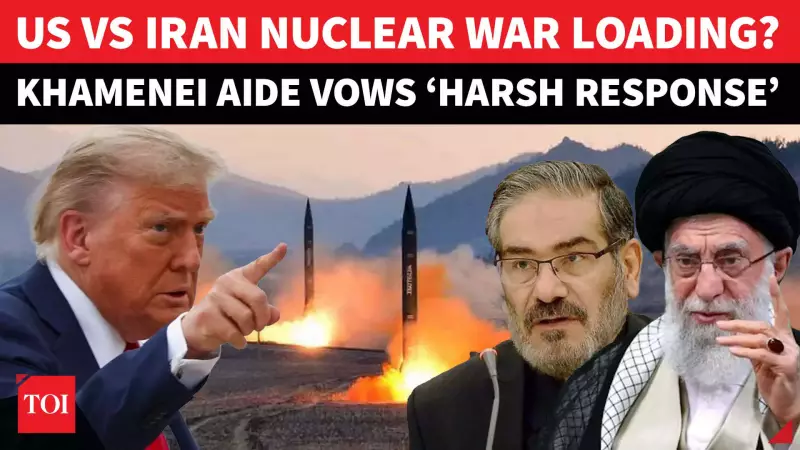
In a dramatic escalation of rhetoric, a senior aide to Iran's Supreme Leader Ayatollah Ali Khamenei has issued a stark warning, promising a response "beyond imagination" to any new aggression. This comes directly after former US President Donald Trump publicly stated support for potential Israeli strikes to prevent Iran from rebuilding its missile and nuclear capabilities.
A Cycle of Threats and Warnings
The verbal clash follows a period of intense military action. The context for these threats is the series of US and Israeli strikes on Iranian nuclear sites in June, which reportedly resulted in hundreds of casualties. These attacks significantly heightened fears of the regional conflict expanding beyond current flashpoints.
Trump's comments, which included the phrase 'knock the hell out of Iran,' were aimed at Tehran's nuclear ambitions. He explicitly stated that Iran must not be allowed to reconstruct the missile or nuclear capabilities that were damaged in the June operations. This hardline stance from a key figure in US politics has been interpreted in Tehran as a direct provocation and a green light for further military action by Israel.

Iran's Doctrine of Pre-Determined Response
In reaction to Trump's statement, the Iranian side has been unequivocal. The aide to Supreme Leader Khamenei emphasized that any new act of aggression would trigger a harsh and immediate reaction. More ominously, Iranian officials have reiterated that their national defence doctrine includes pre-determined responses. This means their countermeasures are planned and ready to be executed even before an imminent threat is fully carried out, signalling a posture of proactive defence.
The warnings from both sides have created a tinderbox atmosphere. Analysts fear that a single miscalculation or a minor skirmish could now trigger a pre-planned and potentially devastating chain of events, drawing the United States and Israel into a direct and large-scale confrontation with Iran.
Rising Fears of a Wider Regional War
The exchange of threats on December 30, 2025, marks a dangerous new phase in the long-standing tensions. The situation is no longer just about diplomatic disagreements or sanctions; it has moved firmly into the realm of explicit military threats following the kinetic actions of June. The international community is watching with deep concern as the rhetoric threatens to overtake diplomatic channels.
The core issue remains Iran's nuclear program. While Iran has consistently stated its nuclear ambitions are peaceful, the US, Israel, and their allies believe the program is aimed at developing weapons. The destruction of key sites in June was a major setback for Iran, and Trump's latest comments are seen as an attempt to deter any recovery effort permanently.
The immediate consequence is a sharply elevated risk of a wider regional conflict. With both sides publicly committing to severe retaliation, the margin for error or de-escalation has become perilously thin. The world now waits to see if these warnings remain rhetorical or if the simmering crisis in the Middle East is about to boil over into an unprecedented confrontation.






