

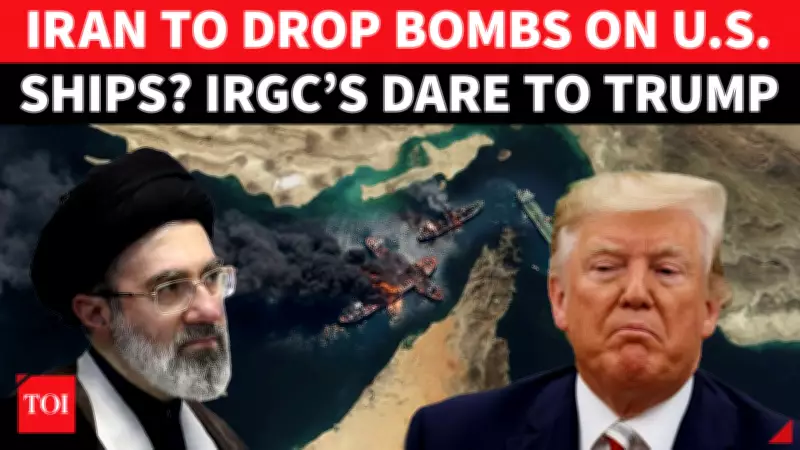
Iran Draws Red Line in Strait of Hormuz, Claims US Warship Transit Violates Ceasefire
The Islamic Revolutionary Guard Corps (IRGC) has issued a stark and unequivocal warning against any United States military presence in the strategically vital Strait of Hormuz, explicitly declaring such actions a direct violation of the existing, fragile ceasefire agreement. This declaration comes as regional tensions escalate dramatically, with the potential to disrupt global energy markets and trigger a wider geopolitical confrontation.
Escalating Tensions and Conflicting Claims
While the United States Central Command (CENTCOM) asserts that its naval vessels are operating in the area to ensure the security and safe passage of international shipping lanes, Iran has categorically and forcefully rejected this justification. Iranian authorities maintain that the transit of US warships through the strait constitutes a provocative military maneuver that breaches the terms of the ceasefire, which has been holding precariously.
The situation is further complicated by political signals from Washington. Former President Donald Trump has indicated a potential shift towards a more aggressive posture, including the possibility of imposing a naval blockade following the collapse of recent diplomatic talks. This threat adds a significant layer of instability to an already volatile situation.

Global Stakes and the Specter of Crisis
The Strait of Hormuz is a critical maritime chokepoint, through which approximately one-fifth of the world's seaborne oil exports pass. Any military confrontation or significant disruption in this narrow waterway would have immediate and severe repercussions for global energy supplies, likely triggering an international oil crisis and economic shockwaves.
The current standoff threatens to spiral into a major international crisis, drawing in global powers and testing the resilience of diplomatic channels. The failure of recent negotiations, reportedly held in Islamabad, has left a vacuum that is now being filled with military posturing and harsh rhetoric from both sides.
Broader Regional Context
This latest flare-up occurs against a backdrop of sustained regional hostility and a series of related incidents that have kept tensions high:
- Iran has issued warnings regarding the "non-negotiable" status of its control and interests in the Hormuz region.
- Proxy groups aligned with Iran, such as Hezbollah, have been involved in cross-border drone incursions.
- There have been targeted strikes near diplomatic convoys, highlighting the persistent threat environment.
- Statements from Israeli leadership about potential strikes on Iranian nuclear facilities add another dimension to the regional security dilemma.
The IRGC's declaration serves as a clear red line, setting the stage for a dangerous game of brinkmanship. With vital economic interests and regional security hanging in the balance, the international community watches closely as the Strait of Hormuz once again becomes the epicenter of a potentially explosive geopolitical confrontation.






