

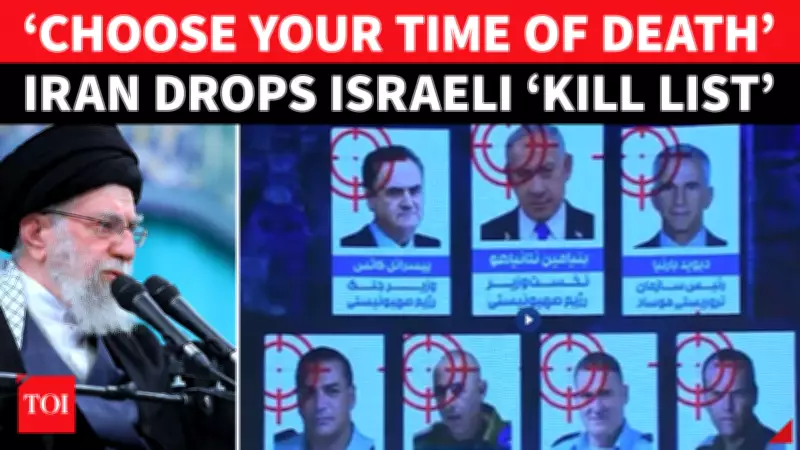
Iranian State TV Broadcasts 'KILL LIST' Targeting Israeli Leaders, Including Netanyahu
In a provocative move, a state-run Iranian television channel has broadcast images of seven senior Israeli figures placed under crosshairs, accompanied by a Hebrew-language threat that referenced the Ababil drone. The broadcast explicitly named Prime Minister Benjamin Netanyahu and top security chiefs, escalating tensions in the already volatile Middle East region.
Details of the Threatening Broadcast
The broadcast, which aired recently, displayed a so-called 'KILL LIST' with the names and images of key Israeli officials. This act is seen as a direct intimidation tactic by Iran, as it comes amid heightened geopolitical friction. The reference to the Ababil drone, known for its military capabilities, adds a layer of urgency to the threat, suggesting potential retaliatory strikes.
Context of Rising Tensions and Diplomatic Moves
This televised threat follows a series of diplomatic and military exchanges. Hours before the broadcast, the Israel Defense Forces (IDF) issued a public call urging Iranians to contact Mossad, Israel's intelligence agency, through official channels. This unusual move indicates a possible intelligence-gathering effort or a psychological operation aimed at destabilizing Iranian operations.

Simultaneously, Tehran and Washington are engaged in nuclear talks, with the outcome uncertain. US President Donald Trump has warned of "trauma" if no deal is reached, highlighting the high stakes involved. Iran has previously threatened strikes on Israeli and American targets, making the current situation particularly precarious.
International Reactions and Broader Implications
The broadcast has drawn international attention, with analysts viewing it as a signal of Iran's willingness to escalate conflicts. The involvement of other global powers, such as Russia and China, in regional maneuvers, as seen in recent naval exercises in the Strait of Hormuz, complicates the geopolitical landscape. This incident underscores the fragile state of Middle East diplomacy and the potential for rapid escalation into broader conflicts.
As tensions mount, the world watches closely, with concerns over the impact on global security and stability. The 'KILL LIST' broadcast serves as a stark reminder of the ongoing hostilities and the need for cautious diplomatic engagement to prevent further deterioration.






