Iran's Conservative Heartland Ignites New Protest Wave
In a significant development for Iran's political landscape, the bloodiest crisis in recent years has emerged from an unexpected source: Tehran's traditional market area, historically a bastion of support for the Islamic Republic. Bazaar workers and merchants, who played crucial roles in establishing the current regime in 1979 and largely avoided previous protest movements, have now become the driving force behind widespread anti-government demonstrations.
Economic Collapse Sparks Merchant Rebellion
The immediate trigger for this unprecedented uprising was the dramatic collapse of Iran's currency, the rial, which sent import costs soaring and exacerbated already severe inflation in an economy crippled by international sanctions. Middle-class Iranians found themselves struggling to afford basic necessities like meat and other food items, creating unbearable pressure on shopkeepers and merchants throughout the country.
"All the shop owners closed their shops and said, 'We can't sell anything,'" recounted a 40-year-old woman who operates a clothing shop in Tehran's bazaar with her husband. Her husband was among the first to join the protests in late December, when angry merchants took to the streets to denounce Iran's paralyzed economy and demand leadership changes.

From Loyal Supporters to Vocal Opponents
What makes this protest wave particularly ominous for Iran's ruling clerics is its origin within traditionally supportive segments of society. The uprising quickly spread to other conservative strongholds including the clerical center of Qom and the holy city of Mashhad, where some of the largest demonstrations in decades have occurred.
"All protests need an ignition. This time, the ignition was the currency rate, which pushed bazaaris and shopkeepers around the bazaar to close their stores in protest," explained Mohsen Sazegara, a former Iranian government official turned opposition activist now living in the United States.
Sazegara, who is in his 70s, emphasized that "Right now it's about economic injustice. But people have many other problems with the regime. Its ideology is not accepted by the people anymore, even among my generation."
Historical Significance of Bazaar Protests
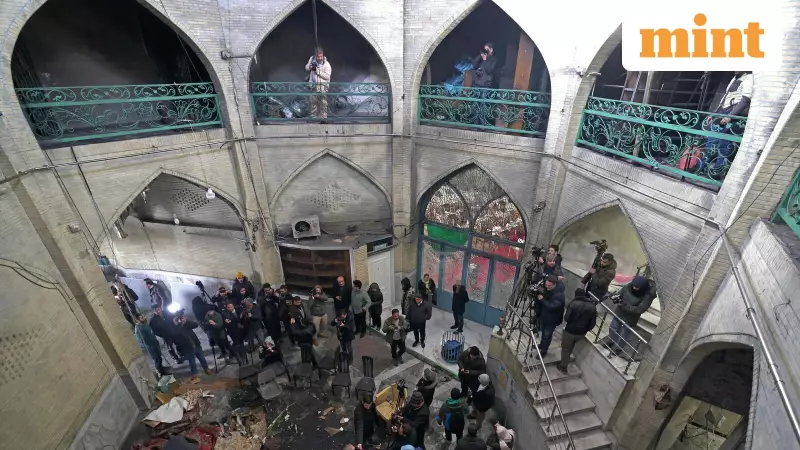
The political symbolism of bazaar protests carries deep historical resonance in Iran. Traditional covered marketplaces have long served as vital economic hubs and political bellwethers. During the 1979 revolution, Tehran bazaar shop owners were among the first to mobilize, providing crucial financial support to the opposition and leveraging their nationwide networks to organize unrest.
After coming to power, Ayatollah Ruhollah Khomeini specifically promised to "preserve" the bazaar and blamed the deposed shah for marginalizing these traditional markets, some sections of which date back 2,000 years. Many bazaaris were subsequently recruited into political positions within the Islamic Republic.
"Even for Iranians who have no historical memory of the 1979 revolution, when the bazaar closes, when it goes on strike, it means it is a political moment that can be seized by others," noted Arang Keshavarzian, a professor of Middle Eastern studies at New York University who has written extensively about bazaar-state relations in Iran.
Nationwide Spread and Violent Crackdown
The protests rapidly expanded beyond Tehran, reaching conservative cities like Isfahan and even the Persian Gulf island of Qeshm, a free-trade zone that has seldom experienced political mobilization. In Mashhad, Iran's second-largest city, massive demonstrations occurred near the Imam Reza Shrine, an important pilgrimage site for Shiite Muslims worldwide.
Security forces responded with escalating violence, deploying in large numbers with lethal weapons. According to human rights groups and eyewitness accounts, security personnel fired gunshots, tear gas, and stun grenades at protesters. In Mashhad alone, a medical worker interviewed by Amnesty International reported seeing approximately 150 protester bodies in a single hospital morgue on January 9.

Personal Stories of Protest and Loss
The human toll of the crackdown became evident through individual stories. A 32-year-old construction contractor in Isfahan joined protests despite being religiously observant—regularly attending Friday prayers and keeping Ramadan fasts. He had grown disillusioned with political repression and economic hardship exacerbated by sanctions and water mismanagement in his region.
After joining demonstrations on January 8, when authorities shut down internet access and intensified violence against protesters, the businessman was critically wounded and died a day-and-a-half later, leaving behind a widow and two young children.
Current Situation and Future Implications
While the immediate unrest has been quelled through brutal force that killed thousands, underlying dissatisfaction remains pervasive. Streets in protest centers are now largely empty, with heavy security patrols maintaining control, but the fundamental grievances that sparked the uprising continue to fester.
The participation of traditionally loyal segments of Iranian society in anti-regime protests represents a significant shift in the country's political dynamics. As economic conditions deteriorate and political freedoms remain restricted, the alliance between merchants and the Islamic Republic continues to fray, potentially creating new challenges for Iran's ruling establishment in maintaining control over its historical support bases.