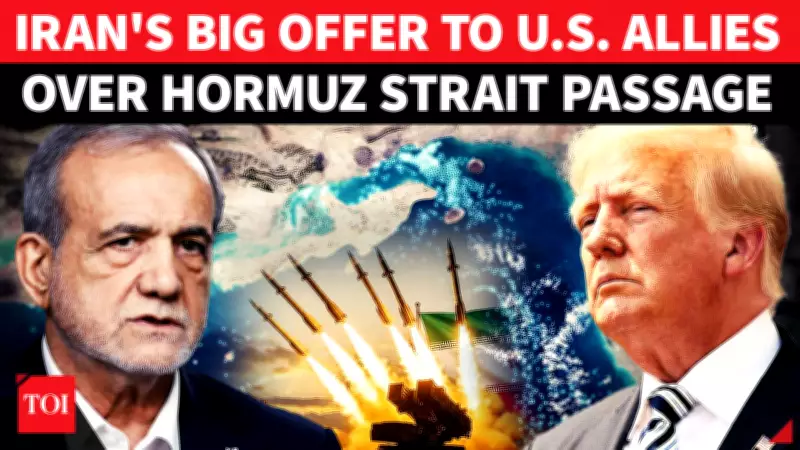
Iran's Revolutionary Guard Proposes Strategic Trade-Off in Middle East
In a bold geopolitical maneuver, Iran's Revolutionary Guard has issued a significant offer to nations across the Middle East. The proposal states that countries which expel United States and Israeli ambassadors could receive unrestricted passage through the critically important Strait of Hormuz. This announcement arrives at a moment of heightened regional tensions, following recent military strikes by US and Israeli forces on Iranian targets.
Escalating Tensions and Global Oil Implications
The Strait of Hormuz is not merely a local waterway; it is a global economic artery. This narrow channel carries approximately 20 percent of the world's seaborne oil supply, making it indispensable to international energy markets. The recent surge in attacks and threats near the strait has already begun to slow tanker traffic, pushing global oil markets into a state of heightened alert and volatility.
In response to Iran's statements, US President Donald Trump issued a stern warning. He cautioned Iran against threatening shipping through the strait, emphasizing that any attempt to disrupt the flow of oil would trigger massive retaliation from the United States. This exchange underscores the high-stakes nature of the current standoff, where energy security and military posturing are deeply intertwined.

The Strategic Calculus Behind Iran's Offer
Iran's proposal appears designed to leverage its control over the Strait of Hormuz to achieve diplomatic and strategic gains. By offering preferential passage, Tehran is effectively attempting to isolate the United States and Israel within the region, encouraging other nations to sever or downgrade their diplomatic ties with these two countries.
The context of this offer is crucial. It follows a series of military engagements, including US and Israeli strikes on Iranian assets, which have raised fears of a broader conflict. Iran's move can be seen as a countermeasure, using economic pressure as a tool of statecraft to rally regional support and challenge American and Israeli influence.
Potential Regional and Global Repercussions
The implications of Iran's offer are far-reaching:
- Regional Diplomacy: Nations in the Middle East now face a complex choice between maintaining relations with the US and Israel or securing vital economic access through the Strait of Hormuz.
- Oil Market Stability: Any significant disruption in the strait could lead to sharp increases in global oil prices, affecting economies worldwide.
- Security Dynamics: The situation increases the risk of military confrontations, as the US has pledged to protect freedom of navigation in these waters.
As tensions continue to escalate, the international community watches closely. The Strait of Hormuz remains a flashpoint where geopolitical ambitions, energy needs, and security concerns converge, making this development a critical issue for global stability.