

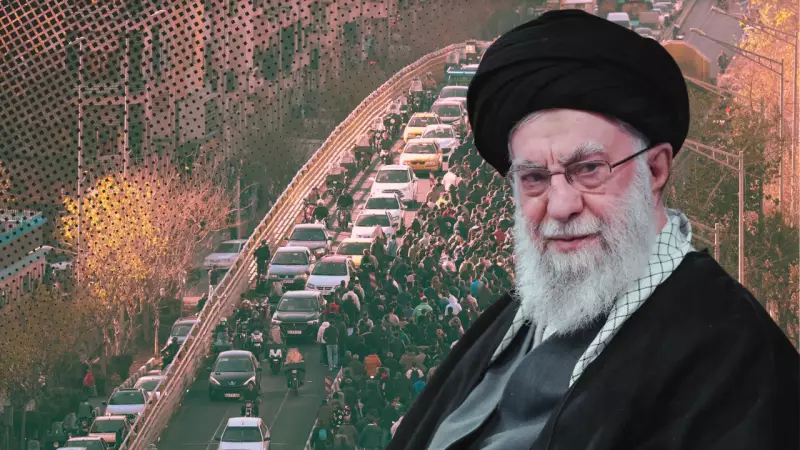
Iran's Supreme Leader, Ayatollah Ali Khamenei, has issued a defiant response to US President Donald Trump, stating the Islamic Republic "will not yield to the enemy." This comes after Trump's online pledge that the United States would intervene if Iranian authorities violently suppressed peaceful demonstrators.
Defiance and Distinction: Khamenei's Dual Message
In a speech marking a Shiite holiday, Khamenei directly addressed the ongoing unrest while firing back at the American president. "God willing and by divine grace, we will bring the enemy to its knees," he declared. However, his address carried a dual message for the domestic audience.
He notably acknowledged the economic hardships fueling the widespread demonstrations. "The shopkeepers have protested against this situation, and that is completely fair," Khamenei said, adding that the president and other officials were working to find solutions.

Yet, he drew a sharp line between legitimate protest and what he termed as rioting. The Supreme Leader warned that "rioters must be put in their place," signaling a firm stance against the escalating violence that has accompanied the protests.
Protests Spread Amid Violence and Casualties
The protests initially erupted last Sunday, driven by anger over rising prices and severe economic stagnation in the sanctions-hit nation. The unrest has since spread rapidly and turned violent, reaching more than two dozen cities across Iran.
According to an AFP tally based on local media reports, at least 25 cities have witnessed protest gatherings of varying scales. Official Iranian figures state that at least eight people, including security force members, have been killed in the clashes. The first fatalities were reported on Thursday.
On Saturday, further casualties were confirmed. The Mehr news agency, citing the Revolutionary Guards, reported that Ali Azizi, a member of the Basij paramilitary force, was killed in the western city of Harsin after being stabbed and shot. Separately, Tasnim news agency reported a man died in the holy city of Qom when a grenade he was handling exploded.
Economic Grievances Take a Political Turn
While the demonstrations began squarely over economic hardships, they have increasingly adopted political overtones. In many cities, protesters have been heard chanting slogans directly challenging the ruling establishment, indicating a broadening of public discontent.
The situation presents a significant challenge for the Iranian leadership, which must navigate severe economic pressures exacerbated by international sanctions while maintaining domestic order. Khamenei's speech, which both recognized economic pain and threatened rioters, reflects this delicate balancing act.
The international dimension added by President Trump's promise of potential US intervention on Truth Social has further heightened tensions. Trump had stated, "If Iran shoots and violently kills peaceful protesters, which is their custom, the United States of America will come to their rescue," a claim met with swift condemnation from Tehran.
As the protests continue, the world watches to see whether the government's combination of acknowledging grievances and promising a crackdown on violence will quell the unrest or fuel further confrontation on the streets of Iran.






