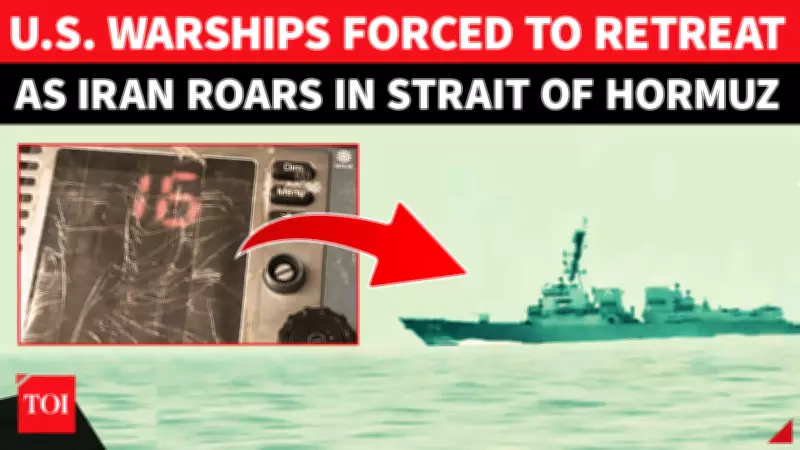
Iran Intercepts US Warships in Strait of Hormuz, Forces Dramatic Retreat
A covert US naval mission in the strategic Strait of Hormuz ended in a dramatic and tense withdrawal after Iranian forces intervened, according to reports from Iranian State TV. The incident, which occurred amid ongoing diplomatic talks between Iran and the United States in Islamabad, has significantly heightened geopolitical tensions in the volatile Middle East region.
Details of the Naval Confrontation
Iranian State TV reported that two US Navy destroyers, identified as the USS Michael Murphy and the USS Frank E. Peterson, attempted to transit through the Strait of Hormuz. This critical waterway, through which approximately one-fifth of the world's oil passes, has long been a flashpoint in US-Iran relations. However, before the American vessels could complete their passage, Iranian naval forces moved to intercept them.
The Iranian forces issued stern warnings to the US warships, compelling them to abandon their transit and execute a rapid retreat. This forceful intervention underscores Iran's assertive stance in controlling access to the strait, a vital maritime chokepoint for global energy supplies. The reported withdrawal marks a significant escalation in naval posturing between the two nations.

Context of Rising Regional Tensions
The confrontation took place against the backdrop of high-stakes diplomatic negotiations in Islamabad, where US and Iranian officials have been engaged in talks. These discussions, aimed at addressing longstanding disputes, appear to have been directly impacted by the naval incident. The Strait of Hormuz has repeatedly emerged as a central issue in these negotiations, with Iran asserting its sovereignty over the waters.
This event highlights the fragile nature of US-Iran relations, where military maneuvers and diplomatic efforts are closely intertwined. The interception and forced retreat of US warships serve as a stark reminder of the potential for rapid escalation in the region. Analysts note that such incidents could derail ongoing peace talks and lead to broader geopolitical instability.
Implications for Global Security
The Strait of Hormuz is not only crucial for regional security but also for global energy markets. Any disruption in this corridor can have far-reaching economic consequences. The recent naval standoff raises concerns about:
- Increased military provocations in and around the strait.
- Potential impacts on international oil prices and shipping routes.
- The effectiveness of diplomatic channels in de-escalating tensions.
As both nations continue to navigate their complex relationship, the Strait of Hormuz remains a critical testing ground for their strategic intentions. The reported retreat of US destroyers under Iranian pressure signals a challenging path ahead for negotiations and regional stability.