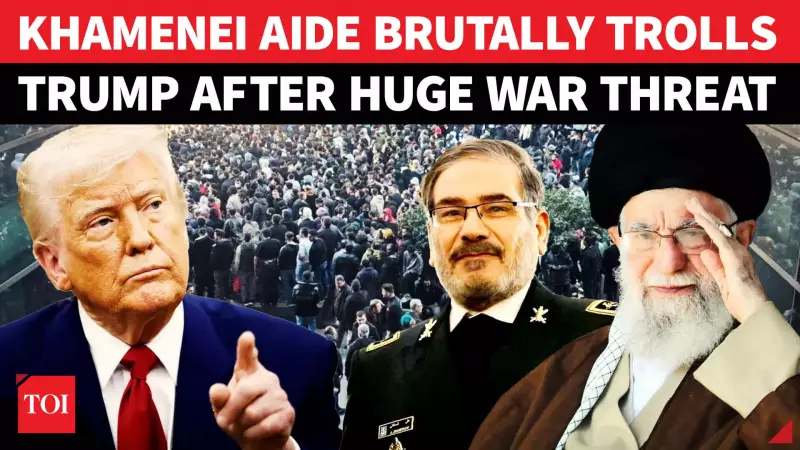
Iran has delivered a sharp and dramatic retort to former US President Donald Trump, firmly drawing a red line around its national security amidst ongoing deadly protests. The fiery exchange, marked by stark warnings, has significantly escalated regional tensions, raising fears of a direct confrontation.
Tehran's Defiant Stand Against 'Reckless Threats'
On January 2, 2026, senior Iranian official Rear Admiral Ali Shamkhani publicly rejected what he termed as "reckless threats and false justifications for intervention" from the United States. His statement was a direct response to a recent warning issued by Trump concerning the internal protests rocking Iran.
Shamkhani issued a clear and ominous warning, stating that any hostile move against Iran would trigger a severe and "regret-inducing response" from Tehran. The language underscores Iran's determination to push back against perceived American pressure and interference in its domestic affairs.

Invoking Past Conflicts as a Cautionary Tale
In its forceful pushback, the Iranian leadership is strategically invoking the legacy of recent conflicts to bolster its position. Officials in Tehran are pointing to the situations in Iraq, Afghanistan, and Gaza as examples of what they describe as disastrous US interventions.
By highlighting these conflicts, Iran aims to frame any potential American action as a prelude to similar instability and suffering. This rhetoric is designed to garner sympathy and present Iran's stance as one of sovereign resistance against a historically aggressive power.
Regional Instability and Global Fears
The escalating war of words between Washington and Tehran highlights the growing instability in the Middle East. With anti-government protests inside Iran entering a critical phase, the external pressure from the US adds a volatile international dimension to the crisis.
Analysts fear that this heated rhetoric could easily spiral into a more direct and dangerous confrontation. The situation remains fluid, with both sides appearing unwilling to back down, thereby increasing the risk of a miscalculation that could have widespread consequences for the region and global oil markets.
The world now watches cautiously as Iran and the United States engage in this high-stakes diplomatic duel, with the shadow of past conflicts looming large over their present dispute.