

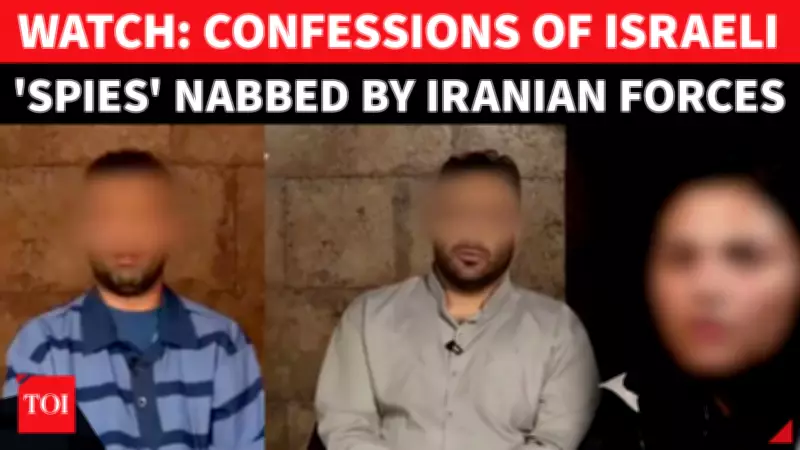
Iran Parades Captured 'Netanyahu Agents' in Televised Confessions Amid War Tensions
In a dramatic development amid ongoing hostilities, Iran has claimed to have dismantled a significant espionage network operating within its borders. The Iranian regime publicly showcased the captured suspects, labeling them as "traitors" in a video broadcast that has garnered international attention.
Details of the Espionage Crackdown
The video footage aired by Iranian authorities features individuals alleged to be agents working for Israeli intelligence. These suspects are shown confessing to sharing sensitive targeting information through social media platforms. Notably, the confessions include references to accounts purportedly linked to Israeli Prime Minister Benjamin Netanyahu, with one suspect stating, "I messaged Bibi" to relay critical data. This crackdown follows the recent reported killing of Majid Khademi, a senior intelligence figure within the Islamic Revolutionary Guard Corps (IRGC), in a strike that Tehran has attributed to its adversaries, further escalating regional tensions.
Context of the Broader Conflict
This incident occurs against the backdrop of heightened military engagements between Iran, the United States, and Israel. Recent reports have detailed a series of aggressive actions, including:

- Missile strikes on Israeli cities, such as Tel Aviv, resulting in casualties and infrastructure damage.
- Shootdowns of military aircraft, including claims of Iranian forces targeting Israeli F-16s and American jets like F-35s and Black Hawk helicopters.
- Ground operations, such as the recovery of a missing U.S. F-15E after clashes between Iranian forces and American commandos.
- Cyber and infrastructure attacks, with allegations of Iranian forces targeting data centers in Dubai and employing advanced drone technology, possibly with Russian support, in conflicts involving Hezbollah and Israel.
The public parading of captured agents is seen as a strategic move by Iran to demonstrate its counter-espionage capabilities and rally domestic support while sending a strong message to its international foes. As the situation continues to evolve, this event underscores the volatile nature of the current geopolitical landscape in the Middle East, with implications for global security and diplomacy.






