

Deepest French Shipwreck Uncovered: A 16th-Century 'Time Capsule' in the Mediterranean
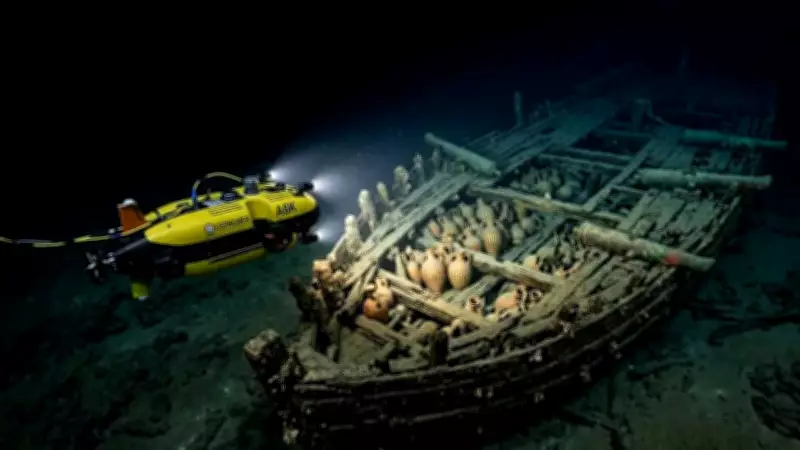
A groundbreaking discovery in maritime archaeology has been announced, marking a new era for underwater exploration. The French Navy, through its CEPHISMER team, has identified the deepest known shipwreck in French territorial waters, located at a staggering depth of 2,567 meters off the coast of Ramatuelle in the Mediterranean Sea. This vessel, officially designated as Camarat 4, was mapped using advanced technology, revealing a remarkably preserved merchant ship from the Renaissance period.
Advanced Technology Enables Discovery in Total Darkness
The discovery was made possible by the deployment of the A6K autonomous underwater drone, a cutting-edge tool capable of operating in the abyssal zone where pressures are approximately 250 times greater than at sea level. Equipped with side-scan sonar and high-definition cameras, the A6K mapped the ocean floor in complete darkness, capturing hours of video and identifying a 30-meter hull that dates back to the 16th century. This technical feat surpasses the capabilities of most standard submersibles, highlighting the innovation behind modern underwater archaeology.
Why the Shipwreck Remained Intact for Centuries
French officials have described the Camarat 4 wreck as a scientific 'time capsule' due to its exceptional state of preservation. The extreme depth of the Mediterranean Sea creates an environment with constant low temperatures and a complete absence of oxygen, which prevents the survival of xylophagous organisms like shipworms that typically degrade wooden structures. As a result, the ship's wooden timbers, along with its cargo of nearly 200 ceramic containers and stacks of plates, remain in pristine condition, offering an unparalleled glimpse into the past.

Clues to the Vessel's Origins and Cargo
High-resolution photogrammetric mapping conducted by the French Navy has provided new insights into the ship's history. Among the artefacts discovered are ceramics bearing IHS monograms, a symbol associated with Christ, suggesting the vessel may have been transporting goods for religious organizations. This evidence points to potential origins along the northern Italian Ligurian coastline. Additionally, the ship was heavily armed with six breech-loading bronze cannons, a large anchor, and two bronze cauldrons, indicating it was equipped to defend against Mediterranean privateers during the 16th century.
Significance for Archaeology and Historical Research
This discovery, managed by the Department of Research into Archaeology of Underwater Shipwrecks (DRASSM), is not just a technical achievement but a major scientific milestone. The intact artefacts, including the cannons and ceramics, will provide researchers with valuable data on trade routes, maritime technology, and cultural exchanges during the Renaissance. The site remains in situ on the ocean floor, preserved for future study and exploration.
In summary, the uncovering of the Camarat 4 shipwreck represents a leap forward in deep-sea archaeology, enabled by state-of-the-art technology and collaborative efforts. It opens a window into a bygone era, promising to enrich our understanding of historical maritime activities in the Mediterranean.






