

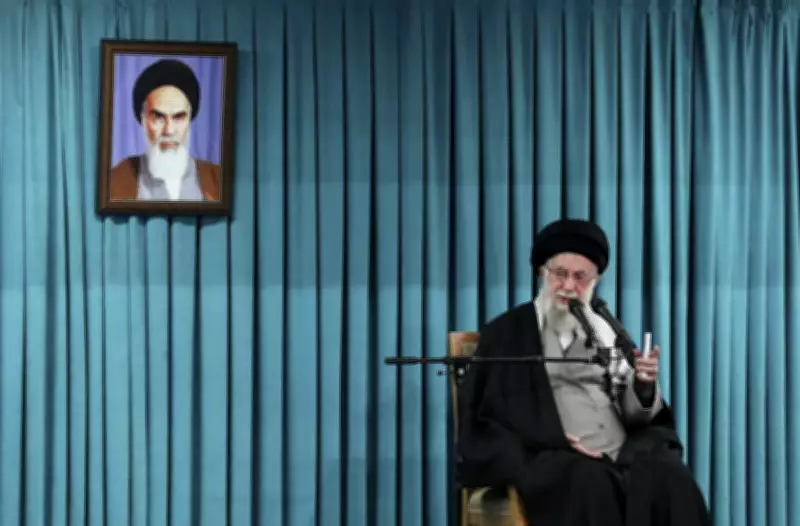
Ayatollah Ali Khamenei: The Enduring Force Behind Iran's Modern Era
Ayatollah Ali Khamenei stands as one of the most pivotal figures in contemporary Middle Eastern history, having served as the Supreme Leader of Iran for an astonishing span of nearly four decades. His tenure, which commenced in 1989 following the death of Ayatollah Ruhollah Khomeini, has profoundly influenced Iran's domestic policies, foreign relations, and religious identity. As the highest authority in the Islamic Republic, Khamenei's leadership has been characterized by a steadfast adherence to conservative Islamic principles, a robust anti-Western stance, and a strategic expansion of Iran's influence across the region.
Early Life and Rise to Power
Born on July 17, 1939, in Mashhad, Iran, Ali Khamenei was immersed in religious scholarship from a young age. He studied under prominent clerics, including Ayatollah Khomeini, and quickly became an active participant in the Islamic revolutionary movement against the Shah's regime. His involvement in the 1979 Iranian Revolution catapulted him into significant political roles, serving as President of Iran from 1981 to 1989 before his appointment as Supreme Leader. This transition marked a critical juncture, as Khamenei succeeded Khomeini, ensuring continuity in the Islamic Republic's ideological foundations while imprinting his own distinct leadership style.
Governance and Key Policies
Throughout his rule, Ayatollah Khamenei has wielded immense power, overseeing all major state institutions, including the military, judiciary, and media. His governance is defined by several core tenets:

- Conservative Ideology: Khamenei has enforced strict Islamic laws, limiting social freedoms and reinforcing religious orthodoxy in public life.
- Economic Management: Under his leadership, Iran has navigated international sanctions, focusing on self-sufficiency and state-controlled economic policies.
- Regional Ambitions: He has championed Iran's role as a regional power, supporting proxy groups in countries like Syria, Lebanon, and Yemen to extend Tehran's influence.
- Nuclear Program: Khamenei has consistently defended Iran's nuclear ambitions, framing them as a sovereign right despite global opposition.
Legacy and Global Impact
Ayatollah Khamenei's nearly 40-year rule has left an indelible mark on Iran and the world. Domestically, he has maintained tight control over political dissent, often suppressing opposition movements and upholding theocratic governance. Internationally, his policies have positioned Iran as a key player in Middle Eastern geopolitics, frequently clashing with Western powers and neighboring states. As he continues to lead, his legacy is debated—viewed by supporters as a defender of Islamic values and by critics as an authoritarian figure hindering progress. Regardless of perspective, his enduring influence underscores his role as a central architect of modern Iran's trajectory.






