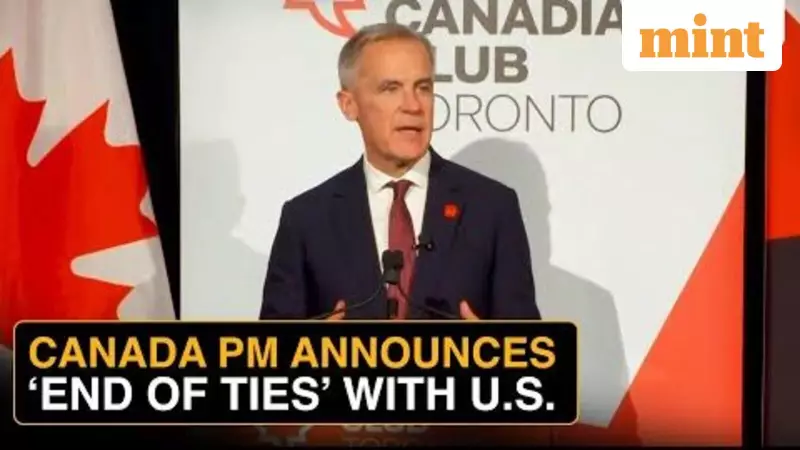
In a landmark announcement that signals a dramatic shift in North American economic relations, Canadian Prime Minister Mark Carney has declared a decisive rupture in trade ties with the United States. The bold move comes as a direct response to recent trade tensions and represents one of the most significant economic policy changes in Canada's modern history.
The Economic Declaration That Changes Everything
On November 4, 2025, Prime Minister Mark Carney made the stunning announcement that Canada would be fundamentally restructuring its economic relationship with its southern neighbor. The decision follows escalating trade tensions and includes immediate retaliatory tariffs worth $50 billion against American imports.
The economic impact is already quantifiable, with Canada projecting a $78 billion deficit budget specifically allocated to manage the transition toward greater economic independence. This strategic deficit spending is designed to cushion the initial economic shock while building long-term resilience.

Carney's First Federal Budget: Radical Restructuring
The Prime Minister's inaugural federal budget introduces sweeping changes that extend far beyond trade policy. In a move toward government efficiency, Carney's administration will eliminate 40,000 bureaucratic positions, representing one of the largest civil service reductions in Canadian history.
Equally significant is the dramatic shift in immigration policy. The budget mandates a 50% reduction in temporary immigration, reflecting a new approach to population management and domestic workforce development.
National security receives unprecedented attention with defense spending set to increase to 5% of GDP by 2035. This substantial boost positions Canada among NATO's top military spenders and signals a renewed focus on sovereign defense capabilities.
Buy Canadian and Export Diversification Strategy
At the heart of Carney's economic independence plan is a robust "Buy Canadian" initiative designed to strengthen domestic industries and reduce reliance on foreign suppliers. The government will implement policies favoring Canadian businesses in public procurement and private sector development.
Perhaps the most ambitious target involves export diversification. The administration aims to double non-US exports within a decade, seeking new trade partnerships in Asia, Europe, and emerging markets to replace lost American trade.
The comprehensive strategy represents a fundamental reorientation of Canadian economic policy, moving away from decades of deep integration with the United States toward a more globally diversified and self-reliant economic model.