US President Donald Trump has reignited global attention by revisiting the idea of acquiring Greenland, even suggesting the use of force if necessary. This has once again turned the spotlight onto the island's legendary, yet largely untapped, mineral riches buried beneath its icy surface.
According to the US Geological Survey, Greenland possesses the world's eighth-largest deposit of rare earth minerals. These elements, crucial for manufacturing everything from superconductor chips and electric vehicles to advanced military hardware and green energy technologies, are a strategic prize. Out of the 34 classified rare earth minerals, Greenland is estimated to have about 23, alongside significant reserves of oil, gas, gold, nickel, and cobalt.
With China currently holding a near-monopoly over the global supply and processing of these critical resources, the United States is actively seeking alternatives. However, experts argue that even a hypothetical US takeover of Greenland would not magically unlock its wealth or allow America to catch up with China for decades. Here are the three fundamental reasons why.

The Daunting Infrastructure Deficit
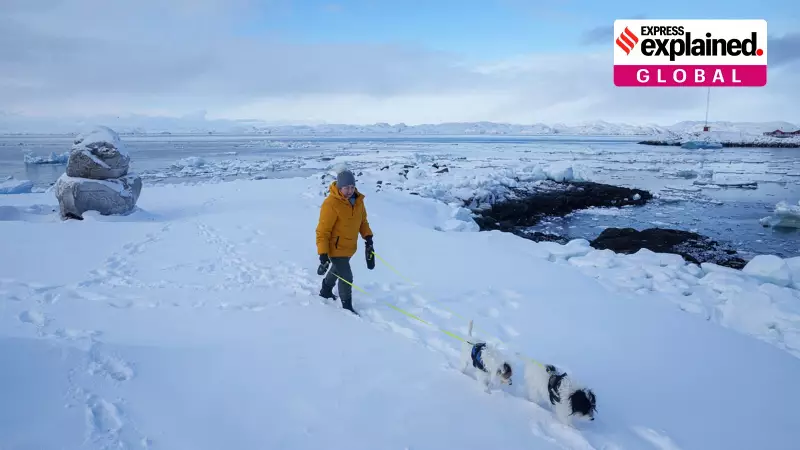
The most immediate and formidable barrier is Greenland's complete lack of industrial-scale infrastructure. The island's remote Arctic location and harsh climate make any large-scale project a monumental challenge. Vast areas are permanently covered in ice, and even in ice-free zones where minerals are located, there are virtually no supporting facilities.
There are no railways, very few roads, limited port facilities, almost no power grids, and a severely limited local workforce with mining expertise. Establishing a modern mine here is incomparably more difficult than in resource-rich nations like Australia or Brazil. Every single component—from roads and airstrips to housing for workers and reliable energy sources—must be built from the ground up at an astronomical cost.
Furthermore, Greenland's settlements are scattered, complicating transport logistics. Once ore is extracted, it must be processed—a stage where China holds massive expertise—and then shipped to international markets. Without this basic infrastructure, exploration projects stall or progress at a snail's pace, deterring the large-scale investment required.
Stringent Environmental Protections and Public Sentiment
Contrary to the perception of a region eager for exploitation, Greenland has implemented strong environmental safeguards. While the homepage of its Mineral Resources Authority promotes the island as an "underexplored, mineral-rich country" with a "pro-mining population and government," the reality is more nuanced.
Large-scale mining poses a severe threat to Greenland's fragile Arctic ecosystem and could accelerate the melting of its ice sheets, a process already exacerbated by global warming. Recognizing this, Greenland banned new offshore oil and gas exploration in 2021, citing climate change as the primary reason.
An added complication is that rare earth deposits in Greenland are frequently found mixed with radioactive uranium. Uranium mining is heavily regulated on the island, adding another layer of legal and environmental complexity to any extraction project.
China's Market Dominance and Economic Viability
Even if the infrastructure and regulatory hurdles were overcome, mining in Greenland must still be economically viable, which is far from guaranteed. The global market for rare earths is intensely competitive and dominated by China, which controls not only a large share of raw production but also the crucial processing pipeline, often at costs Western projects cannot match.
Mining ventures demand billions in upfront capital and have long timelines to see a return on investment. They also require confidence in future commodity prices. Rare earth prices are notoriously volatile, and China can strategically flood the market to lower prices, undercutting and crippling new competitors.
Greenland's appeal lies in its untapped potential, not the sheer volume of its reserves. For most mining corporations, this unexplored nature is a disadvantage when they can access similar resources in more established and accessible mining jurisdictions in South America, Australia, and Africa.

In conclusion, while the geopolitical desire to counter China's rare earth dominance fuels interest in Greenland, the practical challenges of infrastructure, environmental protection, and brutal market economics ensure that its vast mineral wealth is likely to remain buried for the foreseeable future.