

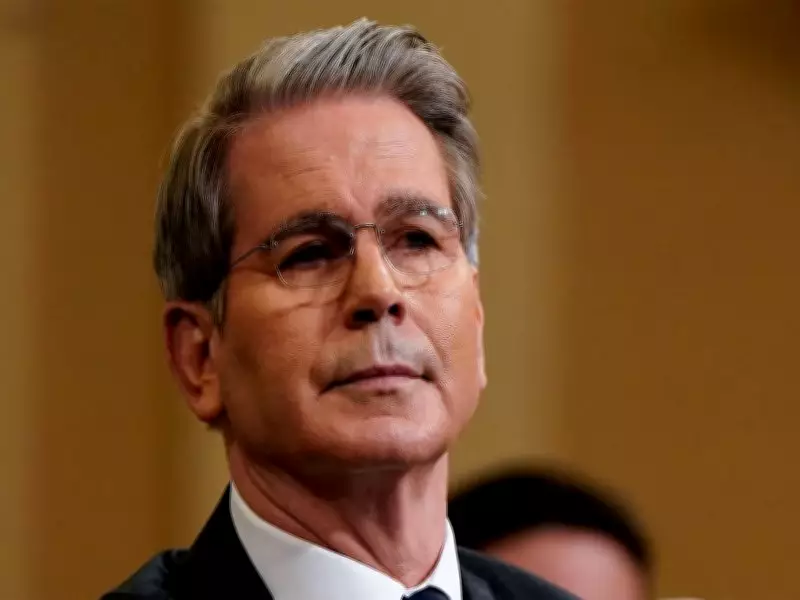
US Treasury Secretary Scott Bessent Reiterates Controversial Claim on Europe's War Funding
In a recent statement that has reignited discussions on international finance and geopolitical strategies, US Treasury Secretary Scott Bessent has reiterated his claim that Europe is effectively funding the war against itself. This assertion, which has been a point of contention in global economic circles, underscores the complex interplay between financial policies and military conflicts in the modern era.
Background of the Claim
Scott Bessent, serving as the US Treasury Secretary, first made this claim earlier, suggesting that European nations, through their economic and financial decisions, are inadvertently supporting conflicts that impact their own security and stability. The reiteration of this viewpoint comes at a time when global tensions are high, and nations are grappling with the economic repercussions of ongoing wars and geopolitical strife.
The core of Bessent's argument revolves around the idea that Europe's financial contributions, whether through aid, trade, or other mechanisms, are being used in ways that ultimately harm European interests. This perspective challenges traditional notions of international cooperation and raises questions about the effectiveness of current economic policies in promoting peace and security.

Implications for Global Economy
The claim by the US Treasury Secretary has significant implications for the global economy, particularly in how nations approach funding and support for conflicts. Key points include:
- Financial Flows: Bessent highlights how money from European sources might be funneled into war efforts, either directly or indirectly, through complex financial networks.
- Policy Reassessment: This statement could prompt European governments to reassess their financial strategies and ensure that funds are not inadvertently supporting adversaries.
- International Relations: The reiteration of this claim may strain diplomatic ties between the US and European allies, as it implies criticism of European economic policies.
Moreover, this issue ties into broader discussions on how economic power is wielded in international conflicts. With Europe being a major economic bloc, its financial decisions have far-reaching consequences, and Bessent's claim suggests a need for greater scrutiny and alignment with security objectives.
Reactions and Debates
The reiteration of Scott Bessent's claim has sparked varied reactions from policymakers, economists, and analysts worldwide. Some experts support his viewpoint, arguing that it sheds light on unintended consequences of financial aid and trade. Others, however, criticize it as an oversimplification of complex geopolitical dynamics or as a politically motivated statement.
In Europe, officials have responded with a mix of concern and defense, emphasizing their commitment to peace and security through economic means. The debate continues to evolve, with implications for future policy-making and international cooperation.
As the global community navigates these challenging times, the insights from the US Treasury Secretary serve as a reminder of the intricate connections between finance and warfare. Moving forward, this discussion may influence how nations design their economic strategies to better align with security goals and prevent self-defeating outcomes.






