US Treasury Secretary Criticizes European Approach to India Trade Amid Russian Oil Controversy
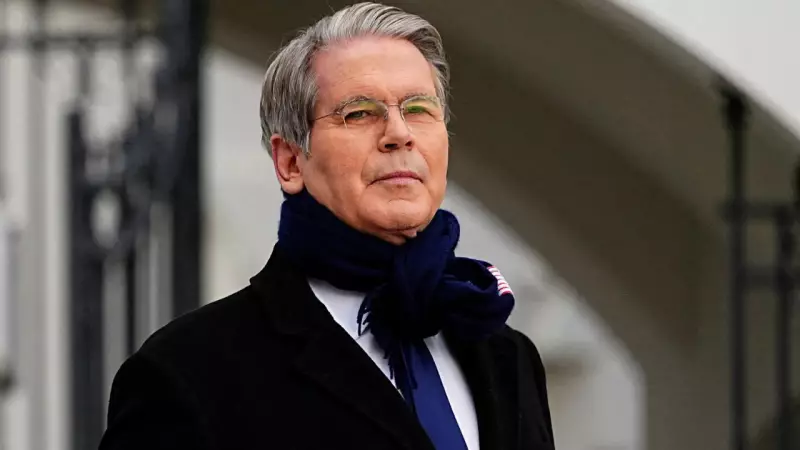
In a striking revelation that highlights growing transatlantic tensions, US Treasury Secretary Scott Bessent has openly criticized European nations for their trade strategy with India while defending American sanctions on Russian oil imports. Bessent asserted that the United States has made significantly greater sacrifices than European countries in the context of the ongoing Russia-Ukraine conflict, pointing specifically to economic measures implemented by Washington.
"They Are Financing the War Against Themselves"
Bessent delivered a pointed critique of European trade policies during recent remarks, stating: "We have put 25% tariffs on India for buying Russian oil. Guess what happened last week? The Europeans signed a trade deal with India." The Treasury Secretary explained the apparent contradiction in European strategy, noting that Russian crude oil flows to Indian refineries, which then process it into refined petroleum products that European nations subsequently purchase from India.
This circular trade pattern, according to Bessent, essentially means European countries are indirectly supporting the Russian economy through Indian intermediaries. "They are financing the war against themselves," he declared emphatically, suggesting that European nations are undermining their own sanctions regime against Moscow through this trade arrangement.

The "Mother of All Deals" Between India and the European Union
Meanwhile, across the Atlantic, European Commission President Ursula von der Leyen has announced what she described as a potentially transformative trade agreement with India. Speaking at the World Economic Forum in Davos last Tuesday, von der Leyen revealed that India and the European Union will formally announce what some are calling "the mother of all deals" during the upcoming India-EU summit this Tuesday.
The European leader expressed optimism about the pending agreement, stating: "I will travel to India. There is still work to do. But we are on the cusp of a historic trade agreement. Some call it the mother of all deals. One that would create a market of 2 billion people, accounting for almost a quarter of global GDP." This ambitious framework promises to reshape economic relations between the world's largest democracy and the European trading bloc.
Internal US Opposition Blocks India Trade Agreement
While Europe moves forward with India, the United States finds its own trade negotiations with New Delhi stalled by internal political opposition. According to new claims that have surfaced, the US-India trade deal has been effectively blocked by three key figures in the previous administration: former President Donald Trump, Vice President JD Vance, and White House adviser Peter Navarro.
Republican Senator Ted Cruz reportedly made this revelation during a closed-door meeting with donors, disclosing that he had been actively battling the White House to accept the trade agreement with India. Cruz indicated that these three administration officials consistently demanded additional tariffs on Indian imports, creating an impasse in negotiations that continues to affect bilateral trade relations.
US Tariffs Show Measurable Impact on Indian Purchases
Secretary Bessent defended the American approach to sanctions enforcement, claiming measurable success from the tariff strategy. In an interview with Politico, he noted: "We put 25 per cent tariffs on India for buying Russian oil. And the Indian purchases, by their refineries, of Russian oil have collapsed. That is a success."
The Treasury Secretary acknowledged that the tariffs remain in effect but suggested potential flexibility in the future, stating: "The tariffs are still on. I would imagine there is a path to take them off." This comment hints at possible diplomatic maneuvering as trade discussions between Washington and New Delhi continue, albeit at a slower pace than the rapidly advancing EU-India negotiations.

The emerging scenario presents a fascinating geopolitical dynamic where traditional allies pursue divergent economic strategies with the same emerging market partner. As India positions itself as a crucial node in global energy markets and trade networks, both American and European approaches reveal competing visions for managing economic relationships in an era of strategic competition and sanctions enforcement.