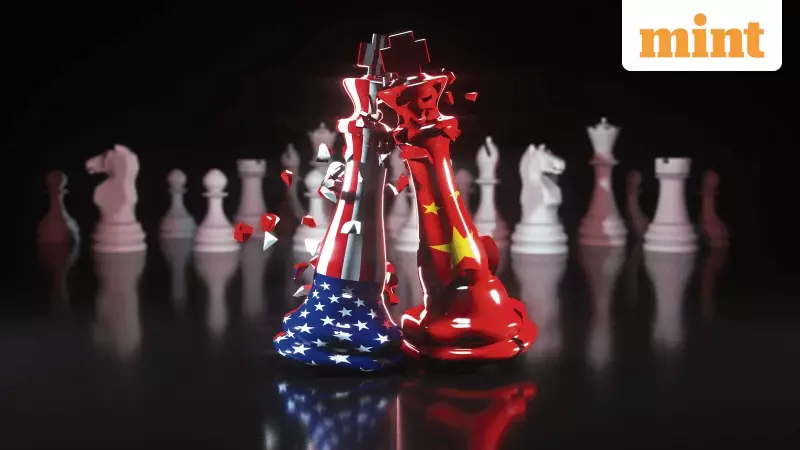
Great Power Rivalry Endangers Developing Nations
The intensifying competition between the United States and China is placing developing economies in a precarious position, with emerging markets facing unprecedented challenges in the current geopolitical landscape. While American rhetoric often dominates global headlines, China's more subdued but equally potent strategies are reshaping international trade dynamics in ways that disproportionately affect poorer nations.
The Davos Spectacle and Global Power Plays
This year's World Economic Forum in Davos highlighted the stark contrast between American bluster and Chinese strategic maneuvering. US President Donald Trump's theatrical appearances and policy reversals captured media attention, but beneath the surface, China was advancing its economic agenda with quiet determination. The resignation of WEF founder Klaus Schwab and the potential relocation discussions led by BlackRock's Larry Fink added to the forum's transitional atmosphere.
Trump's unpredictable leadership style has created what observers term the "TACO" phenomenon—Trump Always Chickens Out—particularly evident when stock market volatility prompts policy reversals. This pattern of behavior has undermined American credibility while distracting from substantive global issues.

China's Strategic Economic Expansion
While Trump dominated headlines at Davos, Chinese Vice Premier He Lifeng presented a contrasting vision of international cooperation, calling for fair treatment of Chinese companies abroad. Behind this diplomatic language lies a comprehensive strategy outlined in China's current five-year plan, which aims for dominance in green technology sectors while maintaining control over traditional manufacturing areas.
China's economic approach has devastating consequences for developing nations. The country's massive trade surplus—reaching $1.2 trillion last year—and control over 37% of global container shipments demonstrate its overwhelming market position. Developing countries find themselves squeezed out of both high-tech sectors and traditional manufacturing niches.
The Developing World's Dilemma
Emerging economies face a dual threat in this great power competition. On one hand, American protectionism and unpredictable policies create market uncertainty. On the other, China's economic policies actively undermine manufacturing sectors in developing nations. The textile industry in Indonesia alone has lost approximately 300,000 jobs to cheap Chinese imports, illustrating the human cost of these macroeconomic trends.
Middle powers like Canada and the United Kingdom are navigating this complex landscape through bilateral agreements with China, such as Canada's tariff reduction on Chinese electric vehicles. However, these arrangements often come at the expense of broader developing world interests.
A Distorted Global Conversation
The current geopolitical discourse suffers from significant imbalance. Trump's ability to dominate news cycles pushes China's hegemonic behavior to the sidelines, while international forums like Davos fail to adequately address the concerns of developing nations. When Financial Times journalists asked Chinese economists what the world could sell to China, the patronizing responses—suggesting only basic commodities and limited educational opportunities—revealed a troubling asymmetry in global economic thinking.
This "what's mine is mine" attitude from economic superpowers creates an environment where developing countries struggle to find their footing. The great power rivalry isn't just about US-China relations—it's about which nations get left behind in the new global economic order.
The coming years will test whether international institutions can adapt to address these imbalances or whether developing nations will be forced to navigate increasingly treacherous economic waters alone.