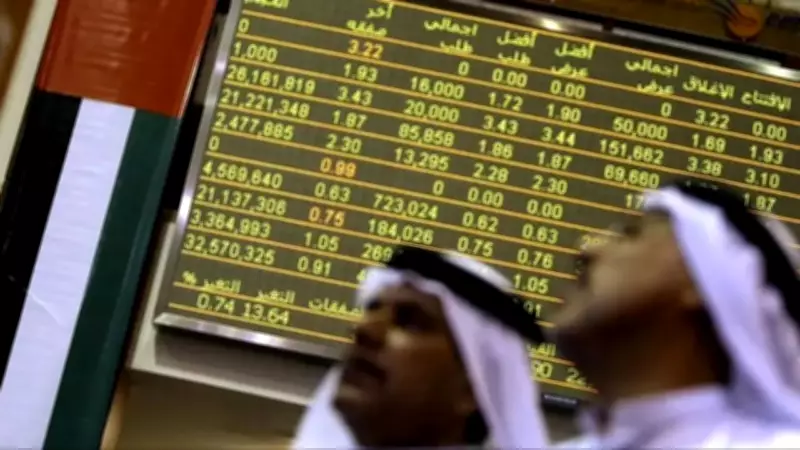
UAE Stock Markets Halt Trading for Two Days Amid Regional Conflict
In a significant economic move, the United Arab Emirates has announced the temporary closure of its two major financial markets, the Abu Dhabi Securities Exchange (ADX) and the Dubai Financial Market (DFM), on Monday, March 2, and Tuesday, March 3, 2026. This decision comes as the UAE grapples with escalating regional tensions following retaliatory strikes by Iran in response to coordinated military actions by the United States and Israel.
Background of the Market Closure
The UAE Capital Markets Authority stated that the closure is part of its supervisory and regulatory duties, allowing authorities and market participants time to evaluate the impact of recent events on financial infrastructure and investor confidence. This halt affects equities, derivatives, and trading in assets worth hundreds of billions of dollars, marking one of the most direct economic repercussions of the ongoing crisis in the Gulf region.
The closures follow a series of Iranian missile and drone attacks on Gulf cities, including Dubai, Abu Dhabi, Doha, and Kuwait, targeting airports and other critical infrastructure. These strikes have prompted widespread safety measures, such as airspace restrictions and travel advisories, leading to significant business disruptions across the area.

Immediate Effects on Gulf Markets
Financial markets are often the first to react to geopolitical instability, and this situation is no exception. While the UAE exchanges are closed, other Gulf markets that remained open experienced notable volatility:
- Saudi Arabia's benchmark index saw sharp declines before partially recovering as investors balanced conflict risks against potential gains from rising energy prices.
- Markets in Muscat and other regional bourses also slid, reflecting a broader risk-off sentiment among investors.
- In Kuwait, authorities took the rare step of suspending trading indefinitely due to "exceptional circumstances" linked to the same regional tensions.
These movements underscore how political stability is deeply intertwined with economic performance in the Middle East, with markets serving as a barometer of risk and confidence.
Impact on Investors and Global Economy
For both domestic and international investors, the temporary shutdown of ADX and DFM has several key implications. Liquidity and price discovery are paused, leaving billions in listed assets in limbo. Risk premiums on Gulf assets are likely to increase as traders reassess their exposure during this period of heightened uncertainty. Investor sentiment is expected to remain fragile until there are clear signs of de-escalation or credible diplomatic resolutions.
Economists note that halting trading does not eliminate market pressure; it merely delays it. When markets reopen, there may be sharp movements as investors recalibrate their positions based on new geopolitical and economic realities. Additionally, the conflict has shaken energy markets, with crude oil prices surging due to fears of supply disruptions. The Strait of Hormuz, a crucial passage for approximately 20% of global oil exports, is under theoretical threat of closure, further fueling economic concerns.
Broader Economic Consequences
While higher oil prices might offer some relief to energy-exporting economies like the UAE, the overall economic impact is complex. Other sectors, including tourism, hospitality, trade, and logistics, have already felt immediate fallout. Airport shutdowns have stranded travelers, and corporate events essential to Ramadan business cycles have been postponed, compounding uncertainty in the region.
Government Response and Future Outlook
UAE authorities have emphasized that public and economic safety are top priorities. The temporary market closure is accompanied by broad advisories across transportation, education, and public services. For instance, airports have issued travel advisories, and schools have shifted to remote learning to ensure operational stability as the situation evolves.

Officials have pledged to monitor conditions closely and provide updates on any further market actions. This includes potential rescheduling of reopening dates for ADX and DFM or additional measures to support investors once trading resumes. The UAE's proactive steps aim to mitigate risks and maintain stability in the face of ongoing regional conflicts.