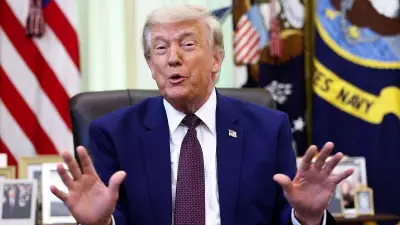
The global oil industry's attention has pivoted dramatically to Venezuela, a shift triggered by recent geopolitical events. Following the seizure of ousted President Nicolás Maduro by American forces on January 3, 2026, former U.S. President Donald Trump declared an intent for the U.S. to take control of the country's oil industry. The initial plan involves Venezuela turning over 30 to 50 million barrels for the U.S. to sell, with proceeds aimed at benefiting both nations. But the larger vision is clear: Trump wants American oil companies to return to Venezuela in a major way.
The Scale of the Challenge: From World Leader to Petro-Wreck
Venezuela sits atop the world's largest proven oil reserves, surpassing even Saudi Arabia and the United States. Yet, its current output tells a story of catastrophic decline. Production has plummeted to well under a million barrels per day—less than the U.S. state of North Dakota—accounting for less than 1% of global supply. This is a far cry from its peak of 3.4 million barrels per day in the late 1990s.
Reviving this crippled industry requires staggering investment. A reasonable estimate suggests $20 billion is needed just to boost output to 1.5 million barrels daily from November 2025's level of 870,000. To return to historic peak production could demand $100 billion or more, covering new facilities, crumbling infrastructure, and environmental cleanup. The state-owned Petróleos de Venezuela, S.A. (PDVSA), hollowed out by two decades of corruption, political interference, and an exodus of talent, lacks both the capital and technology for this task.

A Turbulent Petro-History: From Boom to Bolivarian Revolution
Venezuela's oil saga began with a massive discovery by Royal Dutch Shell in 1922, transforming it into the world's second-largest producer within years. Oil became the economy's foundation. The post-World War II era saw a "50/50" profit-sharing deal with foreign firms, boosting government revenues. Venezuela, alongside Saudi Arabia, was a founding member of OPEC in 1960 to defend exporter interests.
Nationalism culminated in the 1970s with the nationalization of the oil industry. PDVSA was created as a technically proficient buffer between operations and politics. By the 1990s, facing economic crisis, Venezuela launched the "Apertura Petrolera" (Oil Opening), inviting international companies back as partners. This move was fiercely opposed by a charismatic army colonel, Hugo Chávez.
Elected president in 1998 amid low oil prices, Chávez dismantled democratic institutions, took direct control of PDVSA, and aligned with Cuba. While rising oil prices initially funded his "Bolivarian Revolution," his policies planted the seeds of decline. In 2007, he forcibly nationalized major oil projects in the heavy-oil-rich Orinoco Belt, driving out international companies.
The Maduro Legacy and the Path Ahead
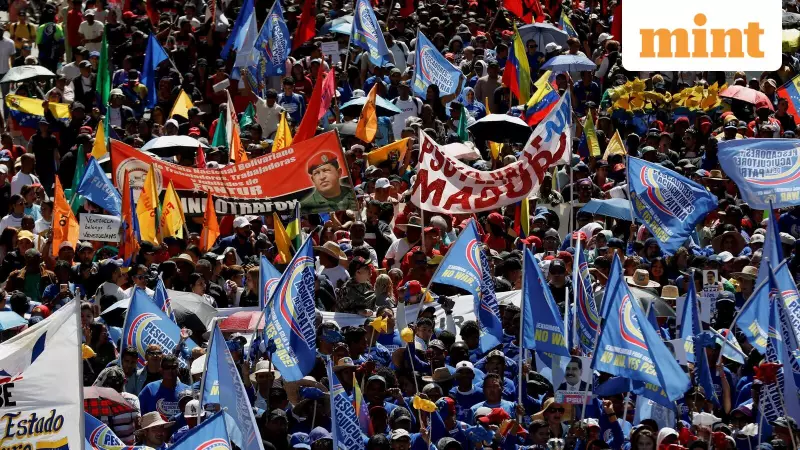
Chávez's successor, Nicolás Maduro, presided over an economic collapse. Hyperinflation, deep recession, and rampant corruption crippled the nation. Oil production fell 60% during his rule. PDVSA became a political piggy bank and a shadow of its former self. An estimated 8 million Venezuelans fled as refugees.
For international oil companies considering a return, the questions are profound. Beyond the physical wreckage, they must assess legal security, regulatory stability, and protection for massive investments. Most Venezuelans, including those who opposed Maduro, believe the country's oil resources belong to the nation and are essential for economic recovery.
While some firms may return to chase unpaid arbitration awards or for high-risk opportunities, a full-scale revival hinges on fundamental political and policy changes in Venezuela. The country remains committed to controlling its own oil. The journey from pariah petrostate to a rejuvenated oil giant will be long, expensive, and fraught with the formidable challenges of a turbulent history.