

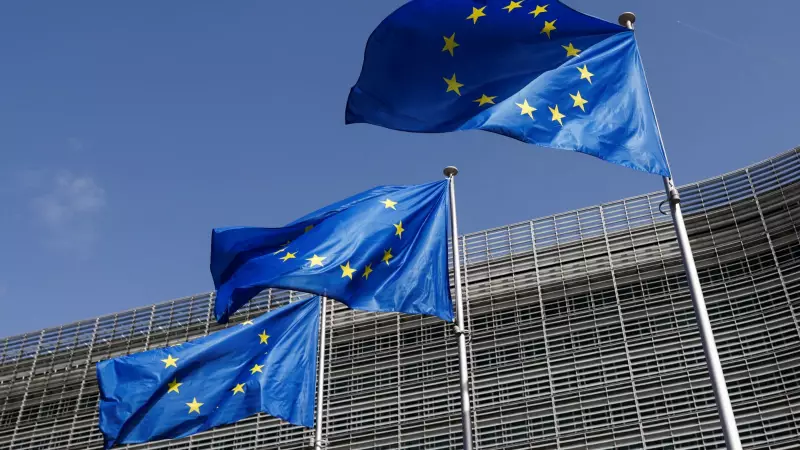
The global trade landscape has been significantly impacted by recent developments involving former United States President Donald Trump and his controversial stance on Greenland. According to reports, Trump's tariff threats, which were linked to his interest in acquiring Greenland, have effectively stalled the ongoing trade deal negotiations between the United States and the European Union. This situation has created a major diplomatic and economic impasse, with far-reaching consequences for international relations and commerce.
Background of the Greenland Acquisition Interest
Donald Trump's fascination with Greenland dates back to his presidency, when he publicly expressed a desire to purchase the autonomous Danish territory. Greenland, known for its vast natural resources and strategic Arctic location, has long been a point of geopolitical interest. Trump's proposal, however, was met with strong resistance from Denmark and the European Union, who viewed it as an infringement on sovereignty and regional stability. The former president's persistent push for this acquisition, coupled with his unconventional diplomatic approach, set the stage for the current trade deadlock.
Tariff Threats and Their Impact on Trade Talks
In response to the EU's opposition to the Greenland deal, Trump reportedly issued tariff threats against European goods. These threats were aimed at pressuring the EU into reconsidering its position, but they backfired spectacularly. Instead of yielding, the European Union hardened its stance, leading to a breakdown in the broader US-EU trade negotiations. The tariff warnings, which targeted key sectors like automotive and agricultural products, introduced a new layer of tension into an already complex relationship. As a result, the trade deal, which was intended to boost economic cooperation and reduce barriers, has been put on indefinite hold.

Diplomatic Fallout and Global Implications
The stalling of the US-EU trade deal has significant diplomatic ramifications. It underscores the challenges of navigating trade agreements in an era of populist politics and unilateral actions. The EU, as a bloc, has emphasized its commitment to multilateralism and rule-based trade, contrasting sharply with Trump's America-first policies. This clash of ideologies has not only delayed the trade pact but also strained transatlantic ties, affecting collaborative efforts on issues like climate change and security. Moreover, other global players, such as China and India, are closely monitoring the situation, as it could reshape international trade alliances and economic strategies.
Economic Consequences for Businesses and Consumers
From an economic perspective, the stalled trade deal poses risks for businesses and consumers on both sides of the Atlantic. Without a formal agreement, tariffs and trade barriers could remain in place, increasing costs for exporters and importers. Industries reliant on cross-border trade, such as technology, manufacturing, and agriculture, may face uncertainty and reduced market access. Consumers might also experience higher prices for goods due to potential tariff escalations. This economic uncertainty comes at a time when the global economy is recovering from the pandemic, making stability in trade relations more crucial than ever.
Future Prospects and Resolution Efforts
Looking ahead, resolving this impasse will require diplomatic finesse and a willingness to compromise from both the United States and the European Union. With a new administration in the White House, there is hope for a reset in US-EU relations, but the legacy of Trump's tariff threats over Greenland continues to loom large. Key steps toward resolution could include:
- Renewed dialogue focused on mutual economic benefits rather than territorial ambitions.
- De-escalation of tariff measures to rebuild trust and facilitate negotiations.
- Involving international mediators or trade organizations to help bridge differences.
Ultimately, the outcome will depend on whether both parties can move past the Greenland controversy and prioritize broader trade objectives.

In summary, Donald Trump's tariff threats related to Greenland acquisition have created a significant roadblock in US-EU trade deal negotiations. This situation highlights the intricate link between geopolitics and trade, with lasting effects on global diplomacy and economic stability. As the world watches, the path forward remains uncertain, but the need for cooperative solutions is clear.





