

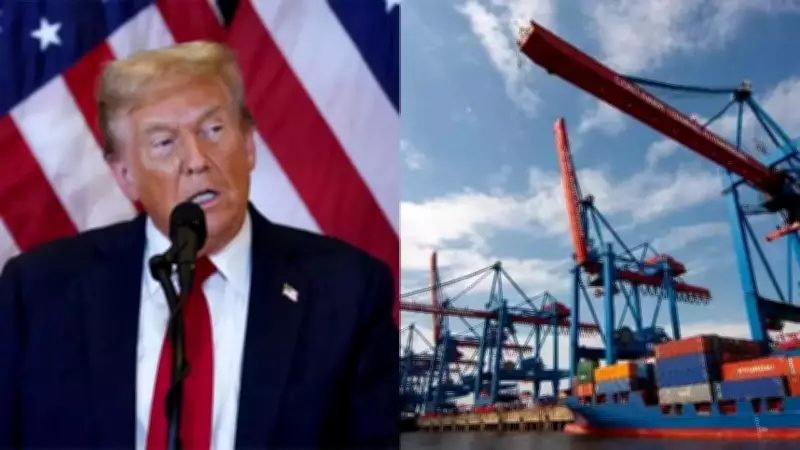
Trump Administration Signals New Section 301 Trade Investigations After Supreme Court Setback
In the wake of a significant setback on tariffs at the US Supreme Court, President Donald Trump has indicated his intention to order Section 301 investigations against key trading partners. This move was swiftly followed by United States Trade Representative (USTR) Jamieson Greer, who confirmed that the probes will target major trading nations and could encompass a broad range of issues, from industrial policies and drug pricing to environmental concerns like ocean pollution.
What Exactly Is Section 301?
Sections 301 to 310 of the Trade Act of 1974, collectively known as "Section 301," are titled "Relief from Unfair Trade Practices." This legislation empowers the US Congress to grant the USTR authority to investigate and take action, including imposing tariffs, to enforce US rights under trade agreements and address foreign trade practices deemed unfair. The law allows the USTR to initiate probes independently or based on external complaints, providing a flexible tool for trade enforcement.
How Do Section 301 Investigations Operate?
These investigations are conducted by a dedicated "Section 301 committee," which reviews petitions, holds hearings, and submits recommendations. As part of trade agreements, the USTR is required to seek consultations with foreign governments at the probe's initiation. For investigations not involving specific agreements, the USTR typically requests consultations with other governments to facilitate dialogue and resolution.

What Happens After a Probe and How Long Does It Take?
If the USTR concludes that a trade agreement violation has occurred or that a country's actions are "unjustifiable" and burden American commerce, action becomes mandatory. In cases where actions are deemed "unreasonable or discriminatory" and restrict US trade, the response is discretionary. Typically, for investigations not tied to trade agreements, the USTR makes a determination within 12 months of launching the probe, ensuring a structured timeline for resolution.
What Steps Can the USTR Take?
The USTR has several enforcement options at its disposal, including:
- Imposing tariffs or other import restrictions.
- Withdrawing or suspending concessions from trade agreements.
- Entering into binding agreements with governments to cease problematic actions or provide compensation to the US.
Historical Use of Section 301
Since the establishment of the World Trade Organization (WTO) in 1995 and up to the first Trump Administration, the US primarily used Section 301 to build cases and pursue dispute settlements at the WTO. The first Trump administration initiated six investigations under this provision, with two targeting China and the European Union resulting in tariff impositions.
In 2020, the USTR imposed tariffs on EU imports based on WTO dispute findings regarding civil aircraft subsidies, though these were suspended in 2021. A notable 2018 investigation led to tariffs of up to 25% on $370 billion in Chinese imports, addressing issues like forced technology transfer and intellectual property rights.
During the Biden administration, after a review, the US increased tariffs on electric vehicles and conducted three other investigations into Nicaragua's policies and Chinese practices in semiconductors and shipbuilding. Under the current Trump administration, the USTR has initiated probes into Brazil's digital trade and ethanol market access, as well as China's compliance with the "Phase One" deal, with additional investigations hinted at before the Supreme Court verdict on digital service taxes and seafood exports.
Is Section 301 Compatible with Global Trade Rules?
In 1998, the EU challenged Section 301, with countries like India, Brazil, China, Japan, and Canada participating as third parties, arguing that its unilateral sanctions bypassed WTO dispute processes. A WTO panel found that US undertakings were sufficient to address prima facie violations, concluding that sections 304, 305, and 306 were consistent with global trade rules, as noted by trade expert Abhijit Das in his analysis.






