France to Request EU's Powerful Trade Weapon Against US Tariffs
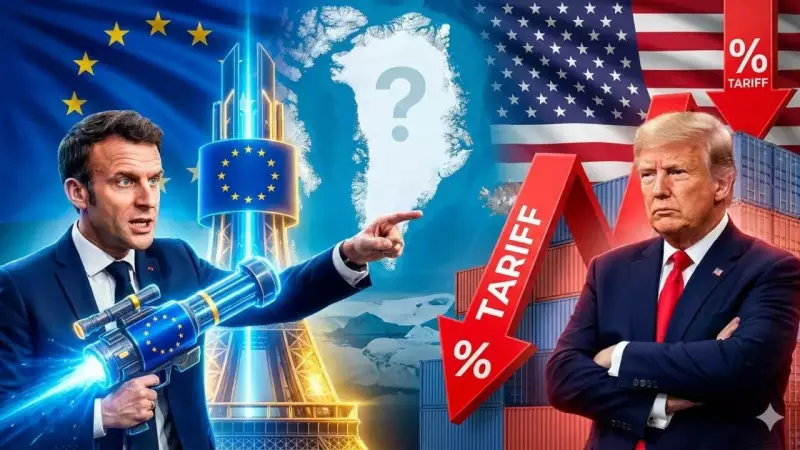
French President Emmanuel Macron will formally ask the European Union to activate its powerful anti-coercion instrument. This move comes as a direct response to potential United States tariffs targeting European countries. The dispute centers on Greenland, with tensions escalating rapidly between the transatlantic partners.
EU's 'Bazooka' Tool Ready for First Use
Macron's office confirmed on Sunday that the French president would request activation of this instrument on behalf of France. The mechanism, often described as the EU's trade "bazooka," has never been used before. It grants the bloc significant power to respond to economic coercion.
The tool allows the European Union to curb imports of goods and services. It can also restrict access to its single market. These measures serve as countermeasures against deliberate trade pressure from third countries.

Trump Announces Fresh Tariffs on Eight European Nations
The situation escalated dramatically when US President Donald Trump announced fresh tariffs on Saturday. These tariffs target eight European countries specifically. The list includes France, Germany, the United Kingdom, Denmark, the Netherlands, Norway, Sweden, and Finland.
Trump cited these countries' support for Greenland as the reason for the tariffs. He announced a 10 percent tariff on goods from these nations, set to take effect from February 1. The levy would rise to 25 percent in June unless "a Deal is reached for the Complete and Total purchase of Greenland."
European Leaders Unite Against 'Unacceptable' Threat
Macron has described the tariff threat as completely unacceptable. He has been in close contact with European counterparts throughout the crisis. The French president will formally raise the issue at the EU level, according to sources close to his office.
EU national ambassadors gathered on Sunday for emergency talks. They discussed the bloc's next steps in this escalating trade confrontation. Several European leaders have expressed strong support for France's stance.
Germany's vice-chancellor and finance minister Lars Klingbeil stated that "a line had been crossed." Denmark's defence minister Troels Lund Poulsen called the US move "unacceptable." Finland's President Alexander Stubb warned that tariffs would "undermine the transatlantic relationship and risk a dangerous downward spiral."
Anti-Coercion Instrument: Europe's Trade Defense Weapon
The EU's anti-coercion instrument represents a significant trade defense mechanism. First adopted in 2023, it was designed primarily as a deterrent against economic pressure. The tool allows the European Union to respond through various measures.
These measures include imposing tariffs, creating new taxes on technology companies, and curbing investment. The instrument can also limit market access or restrict firms from bidding for public contracts. Some EU diplomats remain cautious about activating this powerful tool for the first time.
Broader Implications for EU-US Relations
The dispute has cast serious doubt on the validity of the EU-US trade deal agreed last year. Macron's team believes Trump's tariff plan over Greenland calls this deal into question. The agreement has been partially implemented but still requires parliamentary approval.
Macron has reiterated that Europe will not change its position on Greenland. "No intimidation or threat will influence us," he declared firmly. The emergency talks on Sunday are expected to shape Europe's coordinated response to what many leaders view as coercive measures.
This confrontation marks one of the most serious trade disputes between the European Union and United States in recent years. The activation of the anti-coercion instrument would represent a historic moment in EU trade policy. It would signal Europe's willingness to use its most powerful economic weapons to defend its interests.