Iran Faces Nationwide Unrest as Currency Collapse Sparks Economic Revolt
Iran is experiencing widespread unrest across the country. This time, the protests are not about culture or identity. They are about money. The Iranian rial's dramatic fall to approximately 1.4 million per US dollar in late December shattered fragile markets. This collapse triggered immediate strikes in Tehran's historic Grand Bazaar.
From Merchant Walkouts to National Protests
What began as merchant walkouts has rapidly expanded. The protests now involve students, truck drivers, and ordinary households. The unrest spans all 31 provinces of Iran. Authorities have responded with rolling internet blackouts and widespread power cuts.
According to the US-based Human Rights Activists News Agency, the situation is severe. They estimate at least 600 deaths and more than 10,000 arrests. This represents the largest and most economically diverse challenge to the Islamic Republic since the government crushed the 2022 "Woman, Life, Freedom" movement.

Why This Unrest Matters
The current protests strike at the regime's most sensitive nerve. They challenge the government's ability to provide economic survival, not just ideological legitimacy. Unlike earlier uprisings focused on social freedoms, this revolt is pulling in both lower-income Iranians and the shrinking middle class simultaneously.
Analysts speaking to Foreign Policy note this convergence has long worried the regime. Bazaar strikes carry particular historical weight. Merchants played a pivotal role in the 1979 revolution. Their coordinated economic noncooperation helped accelerate the shah's fall. While the parallel is imperfect, Tehran has not forgotten this history.
A Weakened State Faces Broader Opposition
Regionally, Iran appears more exposed than at any time since the revolution. Its proxy network has degraded significantly. Syria's Assad fell in 2024. Israel damaged Iran's missile and nuclear infrastructure during the June 2025 war, according to Bloomberg reports.
In short, the state is poorer and weaker abroad. Domestically, it faces a broader coalition of opposition than before.
The Immediate Trigger: Exchange Rate Policy
The immediate spark was a policy fight over Iran's preferential exchange rate. This rate was set at 285,000 rials per dollar. The system is widely viewed as a corruption pipeline for regime insiders.
President Masoud Pezeshkian's administration argued the rate fuels rent-seeking and distorts markets. When parliament rejected the budget proposal, public confidence collapsed completely. The rial slid dramatically. Inventories became impossible to price accurately. Normal commerce froze, especially in import-heavy sectors like electronics and mobile phones.
A currency tracker graph shows $1 equal to nearly 1,137,500 Iranian rials as of January 12. Technically, it is just a graph. Politically, it represents governance failing at the level of daily life. This is the point where normal pricing stops working. Salaries become fiction. The middle class realizes it is being pushed into survival mode.
One Iran-based source told Foreign Policy the rage was twofold. People felt anger at corruption and fear that removing subsidies without safeguards would immediately spike food prices. That potent mix turned a technical debate into a street-level revolt.
Daily Life Under Economic Collapse
For many Iranians, the crisis is no longer about hardship. It is about basic survival. Water rationing now hits parts of Tehran for hours at a time. Other districts face rolling blackouts regularly.
Food insecurity has spread into once-stable households. One source described seeing a man tear chicken wings off in a supermarket and flee. Similar accounts appear in Western reporting. Inflation, already above 40% for years, has hollowed out wages completely.
Economists cited by the New York Times estimate purchasing power has fallen to a third or less of what it was a decade ago. The protests' geographic spread reflects this shared precarity. They extend from major cities to marginalized provinces already battered by drought and poverty.

Voices from the Ground
A Tehran trader told Reuters, "We are struggling. We cannot import goods because of US sanctions and because only the Guards or those linked to them control the economy. They only think about their own benefits."
The regime's message remains clear. It offers sympathy on the surface while maintaining repression underneath. Judiciary chief Gholamhossein Mohseni Ejei vowed "no leniency" for those deemed "rioters." He urged judges to move quickly and "firmly."
Foreign minister Abbas Araghchi claimed the situation was "under total control." He blamed Israel and the US for violence while saying Iran remained "open to diplomacy" in comments carried by Al Jazeera.
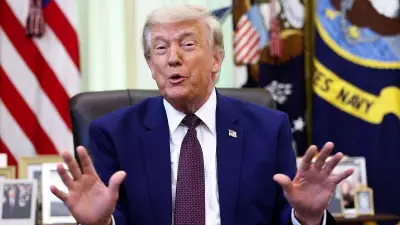
Supreme Leader Ali Khamenei warned the Islamic Republic "will not back down." Outside Iran, President Donald Trump has raised the stakes significantly. He warned publicly that if Tehran "shoots and violently kills peaceful protesters," the US would strike Iran "very hard."
Trump added, "Any Country doing business with the Islamic Republic of Iran will pay a Tariff of 25% on any and all business being done with the United States of America" adding the measure would be "effective immediately." Tehran is taking this seriously, especially after Washington's seizure of Venezuela's Nicolás Maduro.
Behind the Scenes: Regime Calculations
Despite appearances, the regime is not completely cornered yet. The appointment of hard-liner Ahmad Vahidi to a senior IRGC role signals readiness to escalate. Sources say the Guards declared a "yellow" emergency. This stops short of full mobilization but tightens control considerably.
Crucially, senior bazaaris and regime-linked oligarchs remain on the sidelines. Wealthier merchants are insulated from daily currency swings. They are deeply embedded in patronage networks. These groups have far more to lose from chaos than from repression.
The opposition remains fragmented. Analysts quoted by Bloomberg and Reuters describe bitter splits. Monarchists backing Reza Pahlavi face rival camps wary of any single "savior." As one political analyst put it, "Anger is abundant. Coordination is scarce."
Possible Paths Forward
History suggests three broad paths, though none are guaranteed.
- Economic Shock Absorber: Tehran could restore preferential exchange rates at a higher level. It could reopen rent channels and calm markets. This approach would rely on targeted arrests rather than mass bloodshed.
- Escalation and Repression: If protests expand into sustained strikes in transport, energy and public services, the regime may calculate that overwhelming force is worth the cost.
- Slow Unraveling: A prolonged stalemate could emerge. This would involve grinding poverty, intermittent unrest and tighter security. It could hollow out the system without dramatic collapse.
For regime change to become real, several things would need to shift simultaneously. These include elite defections, protesters holding territory, disciplined nationwide noncooperation, and most critically, a credible vision of the "day after" that reassures fence-sitters and neighbors alike.
Iran's proverb looms large: "Same donkey, different saddle." Many Iranians do not want a cosmetic swap at the top. They want a clean break from a corrupt machine.
The Islamic Republic is arguably weaker than it has ever been. But as decades of uprisings show, weakness does not automatically translate into collapse. This is especially true when fear of chaos still rivals hope for change.