

Global Markets Stage Relief Rally After Trump's Greenland Retreat, But Underlying Rupture Remains
In a week marked by global turmoil and intense diplomatic discussions, financial markets experienced a familiar pattern of volatility followed by a rebound, yet fundamental geopolitical fractures appear deeper than ever. The events unfolded against the backdrop of the World Economic Forum in Davos, Switzerland, where world leaders grappled with shifting international dynamics.
"We Are in the Midst of a Rupture, Not a Transition"
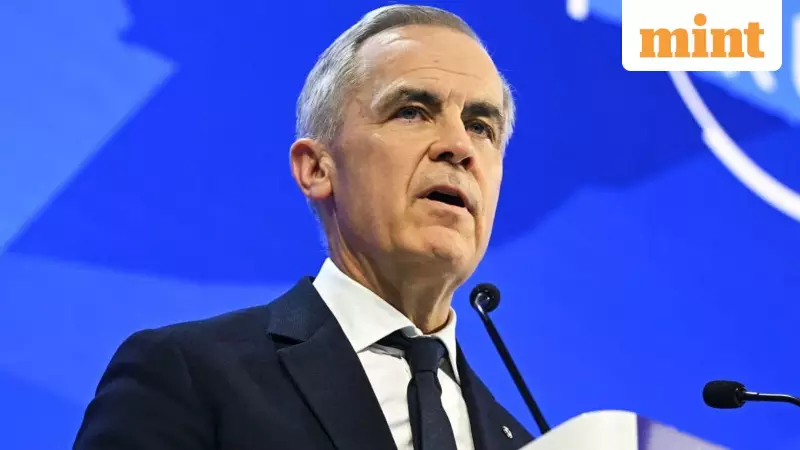
Canada Prime Minister Mark Carney delivered a stark assessment at the Davos gathering, declaring, "We are in the midst of a rupture, not a transition." He pointed to the erosion of the international rules-based order that had prevailed under American hegemony, which historically provided public goods like open sea lanes, a stable financial system, collective security, and frameworks for dispute resolution.
This rupture was vividly illustrated by President Donald Trump's threat to take over Greenland, which sent shockwaves through financial markets at the beginning of the week. The initial non-denial regarding potential military force, coupled with additional tariffs on European countries opposing the move, created significant uncertainty.

Familiar Pattern: Break It, Fix It, Claim the Win
By Wednesday, in what has become a characteristic maneuver, President Trump pivoted from extreme positions to announce a diplomatic resolution. After eschewing force, he revealed "the framework of a future deal" over Greenland and rescinded tariffs scheduled for February 1st.
Global stocks promptly staged a relief rally, recouping most of their earlier losses—a pattern reminiscent of previous episodes. Notably, last April's market downturn, dubbed "Liberation Day" swoon, became an entry point for a subsequent 40% surge in the S&P 500 index.
However, veteran economist Carl B. Weinberg of High Frequency Economics observes that while risk markets display strong muscle memory, "nothing was solved by the events of the past week." He describes the strategy as "Break it-fix-it-claim-the-win... that's the plan," forecasting more disruptive events at unpredictable times, perpetuating uncertainty for economists, investors, and traders.
Broader Issues of Distrust and Dollar Debasement
Macquarie global strategists Thierry Wizman and Gareth Berry emphasize that the supposed Greenland deal fails to address the growing mutual distrust and disagreements between the U.S. and Europe regarding their responsibilities to each other. These responsibilities are embedded in treaties, formal arrangements, and customs developed over the past 80 years.
Trump's dismissiveness toward Europe was evident in his Davos claims that allies "owe" the U.S. for their liberties, with hints that Europe is on the verge of collapse. This changing dynamic is reflected in the lack of a U.S. dollar rally typically accompanying geopolitical tensions.
Instead, traders are flocking to gold, silver, platinum, and defense stocks. Robin J. Brooks, senior fellow at the Brookings Institution, notes dollar weakness against emerging market currencies, suggesting dollar debasement has begun. While the greenback remains stable against developed-market currencies, it has declined approximately 2% against EM currencies and continues to reach new lows.
Financial Interdependence and AI's Role
The financial relationship between the U.S. and Europe remains deeply interconnected. George Saravelos, Deutsche Bank's chief currency strategist, highlights that Europe holds about $8 trillion in U.S. bonds and equities—almost twice as much as the rest of the world combined. Meanwhile, the U.S. depends on foreign capital to fund persistent budget deficits running at nearly 6% of GDP.
Saravelos questions why Europeans would continue playing this role amid existential disruption to the Western alliance's geoeconomic stability. A symbolic move occurred when Denmark's pension funds sold $100 million of Treasury securities, which U.S. Treasury Secretary Scott Bessent dismissed as "irrelevant," citing healthy capital inflows totaling $1.569 trillion in the past 12 months.

Interestingly, the largest international inflows were into U.S. equities ($689 billion), driven largely by the artificial intelligence boom. Foreign purchases of corporate bonds funding AI buildouts accounted for a quarter of long-term securities purchases, making AI not only a stock market driver but also a key component in funding the U.S. current-account deficit.
Institutional Foundations and New World Order
The dollar's international status rests on the unrivaled size, liquidity, and opportunities of U.S. financial markets, along with institutional foundations like an independent Federal Reserve. However, this independence faced scrutiny during Supreme Court arguments regarding Fed governor Lisa Cook's dismissal lawsuit.
More fundamentally, the dollar's global role reflects America's historical position as a reliable defender of the free world—a role now being questioned. As one veteran global investor privately observes, Trump has been "soft with tough guys like China and Russia, and tough with weak guys like Europe and Canada." This investor sees the new world order as anarchic, with gold as the main beneficiary.
Yet, some find hope in Winston Churchill's aphorism that America can be counted on to do the right thing—after exhausting all other options. As markets continue navigating this rupture, the relief rally may prove temporary unless underlying trust and cooperation are restored.





