

Europe's Strategic Dilemma: Confronting Trump While Maintaining Vital US Ties
In a significant display of unity, European capitals recently coordinated to resist President Donald Trump's attempts to gain control over Greenland. This collective pushback highlights Europe's growing assertiveness on the international stage. However, beneath this show of strength lies a fundamental reality: the European continent remains profoundly dependent on the United States across multiple critical domains, making any meaningful decoupling practically impossible in the foreseeable future.
The Multifaceted Nature of European Dependence
For generations, Europe has structured its international relationships around a strategic triad: relying on the United States for military security, Russia for energy resources, and China as an expanding export destination. Today, this framework has dramatically shifted, with America emerging as the primary partner in all three crucial areas simultaneously.
The European Union currently directs approximately one-fifth of its total exports to American markets, making the United States its single largest international trading partner. In the energy sector, about 25% of Europe's natural gas supplies originate from American sources. The military dimension is equally striking, with the largest U.S. military installation in Germany housing more personnel than the biggest German base within the same country.

Beyond Traditional Spheres: Technology and Financial Interdependence
Europe's reliance extends far beyond conventional security and trade relationships. American technology firms and financial services dominate critical sectors across the continent. Payment processing giants Visa and Mastercard collectively control around two-thirds of all card-based transactions in Europe. According to a recent survey conducted by Bitkom, a prominent Berlin-based digital advocacy group, approximately 80% of German companies acknowledge their dependence on American digital technologies and services for daily operations.
Neil Shearing, Chief Economist at Capital Economics in London, observes that "these interconnected dependencies surrounding technology, security frameworks, financial systems, and the dominance of the U.S. dollar constitute the adhesive binding the Western alliance together. What has become increasingly evident is the substantial leverage Washington possesses within this relationship."
Quantifying the Economic Connection
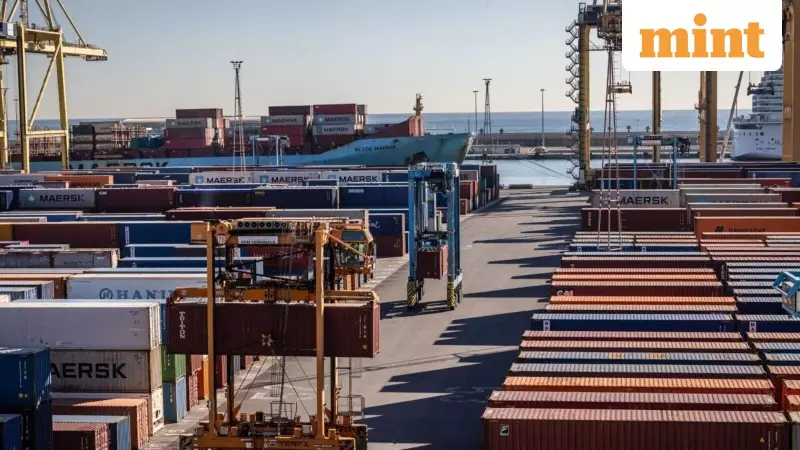
Statistical data reveals the depth of this economic entanglement. During 2024, the European Union exported goods valued at roughly $640 billion to the United States, representing about 21% of its total goods exports—a noticeable increase from approximately 18% in 2019. This export volume to America nearly equals the combined value of goods the EU shipped to its second and third largest markets, the United Kingdom and China respectively. The UK itself demonstrates similar dependency patterns, directing around 16% of its goods exports to American consumers.
European dependence on American technological infrastructure spans from everyday office productivity software to massive data center operations. While the continent has nurtured numerous technology startups in nations like the United Kingdom and France, many of these innovative companies themselves rely on American tech behemoths for essential services including cloud computing platforms and advanced artificial-intelligence semiconductor chips.
European Diversification Efforts and Their Limitations
Recognizing these vulnerabilities, the European Union has actively pursued diversification strategies throughout the past year. These initiatives include announcing a comprehensive free-trade agreement with India and securing a landmark accord with four South American nations. However, as Shearing notes, even these emerging partnerships among middle powers would likely continue leaning heavily on American military protection, financial systems, and access to cutting-edge technologies.

Europe does retain some leverage within this asymmetric relationship. Clemens Fuest, President of the Munich-based Ifo Institute, points out that while American consumers might substitute Champagne with other beverages and purchase luxury vehicles from Asian manufacturers, Europe supplies indispensable industrial components such as parts for F-35 fighter jets. Nevertheless, Moritz Schularick, President of Germany's Kiel Institute for the World Economy, argues that Europe's consensus-driven governance model leaves it poorly equipped for today's era of great-power competition, making the continent "susceptible to division and predictable in negotiations."
The German-American Nexus: A Case Study in Interdependence
Nowhere is this complex relationship more evident than in Germany, where the American partnership has fundamentally shaped postwar reconstruction and prosperity. Many German political and business leaders remain deeply attached to these transatlantic ties. Claus Paal, an entrepreneur based in Stuttgart, articulates this sentiment clearly: "We should certainly pursue agreements with other markets, but there exists no genuine alternative to the United States. Conducting business with America proves significantly easier than with nations like India," citing advantages ranging from reduced bureaucratic hurdles to shared business methodologies and research collaborations.
Stuttgart, capital of the Baden-Wuerttemberg region bordering France and Switzerland, has become a focal point in Trump's trade confrontations. This state, home to industrial powerhouses like Porsche and Mercedes-Benz, exports more goods to the United States than any other German region, with 2024 exports valued at approximately €35 billion (equivalent to $42 billion). The historical connections run deep—Robert Bosch, founder of the automotive components giant, received training in the United States during the late nineteenth century, while American capital and expertise helped revitalize the region's automobile industry following World War II.
Recent developments have further strengthened these bonds. The regional utility company commenced receiving two million tons of liquefied natural gas annually from Louisiana under a twenty-year agreement. Stuttgart hosts several American military bases accommodating around 28,000 U.S. personnel. According to Ifo Institute calculations, this region was among the areas most severely impacted by last year's tariff impositions.
Paal, who leads the Stuttgart Chamber of Commerce, expresses growing concern over tariff threats related to Greenland, noting that such uncertainties paralyze business planning and investment decisions. Over the past two years, the state's exports to the United States have contracted at an annual rate of 6%.
A Generational Perspective on Transatlantic Relations
Georg Schild, a history professor at Tübingen University near Stuttgart, recalls observing annual U.S. military exercises each autumn during his childhood in 1960s West Germany. For Schild's generation, alignment with the American-led West represented finally being "on the correct side of history," accompanied by enthusiastic adoption of American consumer culture. "We never questioned American supremacy," Schild reflects. "We desire American presence, we hold affection for Americans, and witnessing them turn away proves profoundly difficult for us to comprehend."
This emotional and historical dimension underscores why, despite periodic tensions and rhetorical confrontations, Europe's structural dependence on the United States remains both deep-seated and multifaceted, presenting European leaders with an enduring strategic dilemma in an increasingly competitive global landscape.





