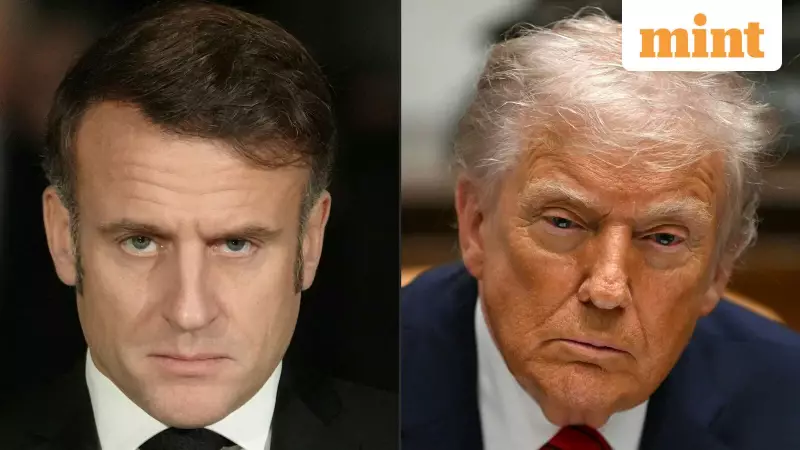
Europe's Moment of Truth: Roaring Back Against Trump's Tariff Threats
Remember the satirical novel The Mouse That Roared? That story feels remarkably relevant today. European nations find themselves in a similar position as former US President Donald Trump turns trade into a weapon over Greenland. The situation demands a decisive response from European leaders who have been acting more like timid mice than powerful tigers.
The Greenland Gambit and Escalating Tariffs
Trump recently threatened substantial tariffs against several European countries. He proposed a 10% duty starting February 1st on imports from nations that sent soldiers to Greenland. These countries include France, Germany, Sweden, Finland, the Netherlands, Denmark, Norway, and the United Kingdom. The tariffs would increase dramatically to 25% in June unless his administration secures a deal to purchase Greenland.
This move exposes Europe's vulnerability as a trade-dependent region. Bloomberg Economics estimates these additional tariffs could slash affected countries' US exports by up to 50%. Germany, Sweden, and Denmark appear particularly exposed to this economic pressure.

A History of Economic Bullying
This situation represents textbook economic bullying. Just last year, the European Union had to accept a 15% tariff from the United States during trade negotiations. Now, that agreement appears to be unraveling as Trump rewrites terms unilaterally. European leaders face a critical question: How much economic pressure will they tolerate before pushing back?
The current response has been inadequate. European nations deployed only three dozen soldiers to Greenland as a symbolic show of support for Denmark. This minimal gesture failed to deter Trump's aggressive stance. Germany has already begun withdrawing its small contingent of soldiers, signaling further retreat.
Europe's Potential Countermeasures
European leaders possess several tools to fight back if these tariffs materialize. The European Parliament could delay approval of last year's trade agreement with the United States. That deal was celebrated by Trump's administration for providing unprecedented market access for American products.
The European Union also maintains its Anti-Coercion Instrument. This powerful mechanism allows retaliation beyond traditional customs duties. It could potentially restrict market access for major American corporations like Google's parent company Alphabet. French President Emmanuel Macron strongly supports using this trade weapon, with backing from Germany's influential VDMA industrial association.
The Security Dilemma
Europe faces a difficult security calculation. Can the continent manage its defense needs without American support, particularly regarding Ukraine? Last year's experience suggests the answer is no, as Europe accepted the 15% US tariff while needing American security assistance.
Denmark correctly notes that a hostile takeover of Greenland would fundamentally change NATO. Trump's latest threats go beyond what Macron previously called NATO's "brain death." They resemble the forced obedience characteristic of the Soviet-era Warsaw Pact.
Challenges to European Unity
Maintaining a united front will prove challenging for Europe. Poland and Italy escaped inclusion on Trump's tariff list and will likely advocate for de-escalation. Trump's European supporters will undoubtedly attempt to sow discord within the bloc.
The United Kingdom, under Prime Minister Keir Starmer's cautious leadership, may pursue separate exemptions. Europe understands the reality: if the White House remains determined to acquire Greenland despite opposition from multiple quarters, it will probably succeed.
A Defining Moment for Transatlantic Relations
This confrontation represents a potential turning point. If being an American ally means accepting trade and technological subservience rather than receiving Cold War-style benefits, European nations might reconsider the relationship's value. Canada's growing closeness with China demonstrates alternative alignments are possible, even for countries sharing extensive borders with the United States.

The situation has surpassed fiction in its strangeness. European leaders must decide whether to continue squeaking apologetically or discover their inner tigers. The time for decisive action has arrived as Trump transforms tariffs into weapons over a remote Arctic territory.